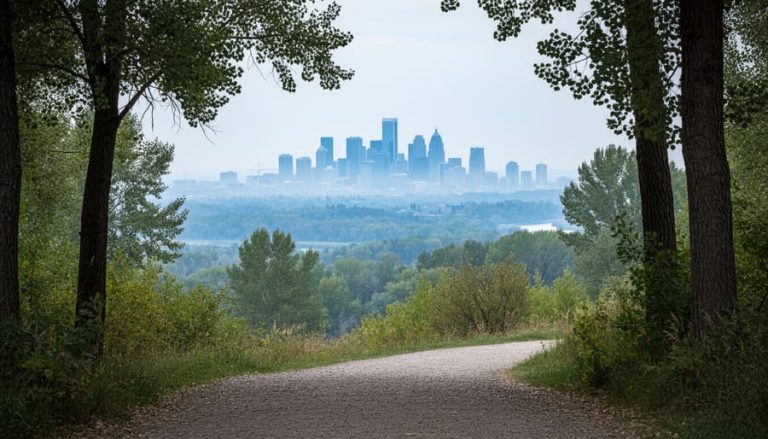
Air quality refers to the condition of the air around us, measured by the concentration of pollutants that can affect human health and the environment. For communities in the BC interior like Vernon and across southern Alberta, understanding air quality alerts is essential for protecting yourself and your family during periods of elevated pollution.
Vernon, British Columbia, recently experienced a significant air quality event when Environment and Climate Change Canada issued a yellow-level alert on July 15, 2026, prompting residents to stay indoors. The alert affected daily life across the region, including the closure of Lakeview Pool on July 31 due to poor local conditions. While Vernon sits just across the provincial border in BC’s Okanagan region, these air quality challenges mirror concerns familiar to many southern Albertans who face similar seasonal pollution events.
This article breaks down what air quality alerts actually mean, how monitoring systems track pollution levels, and the health risks different alert levels pose. You’ll learn which pollutants matter most, how to check current conditions in your area, and the practical steps you can take when advisories are issued. Whether you’re planning outdoor activities, managing health conditions like asthma, or simply want to understand those alert notifications on your phone, knowing how to read and respond to air quality data helps you make informed decisions about when to head outside and when to stay in.
The system isn’t complicated once you understand the basics, and being prepared means you won’t be caught off guard when the next alert hits your community.
What Air Quality Alerts Mean for Vernon Residents
Air quality alerts are public warnings Environment and Climate Change Canada issues when outdoor air pollution reaches levels that could harm your health. These alerts tell you when to modify your outdoor plans and take protective steps, especially if you have breathing problems or fall into a vulnerable group.
The system uses specific pollutant measurements to decide when an alert is necessary. When monitoring stations detect elevated levels of fine particulate matter (PM2.5), ground-level ozone, or other pollutants that exceed the Air Quality Advisory criteria Environment Canada issues an alert for the affected region. The July 15, 2026 alert for the Vernon area reflected conditions that crossed these thresholds, prompting the stay-indoors guidance.
Alerts come in different levels that correspond to the severity of pollution:
- Yellow-level alert
- Air quality poses a low to moderate health risk. Vulnerable groups should reduce prolonged outdoor activities.
- Orange-level alert
- Air quality poses a moderate to high health risk. Everyone should limit strenuous outdoor activities, and sensitive individuals should avoid them entirely.
- Red-level alert
- Air quality poses a high to very high health risk. All residents should avoid outdoor activities, and those with respiratory conditions should stay indoors with windows closed.
- Purple-level alert
- Air quality poses a very high health risk. Everyone should stay indoors and avoid all outdoor exertion until conditions improve.
Environment Canada lifts alerts when monitoring data shows pollutant levels have dropped below the threshold and forecasts indicate sustained improvement. Weather changes, wind patterns, or the clearing of smoke can all trigger an alert’s end. The agency continuously monitors conditions rather than waiting for a set time period to expire, which is why some alerts last hours while others stretch across several days.
How Air Quality Monitoring Works in British Columbia
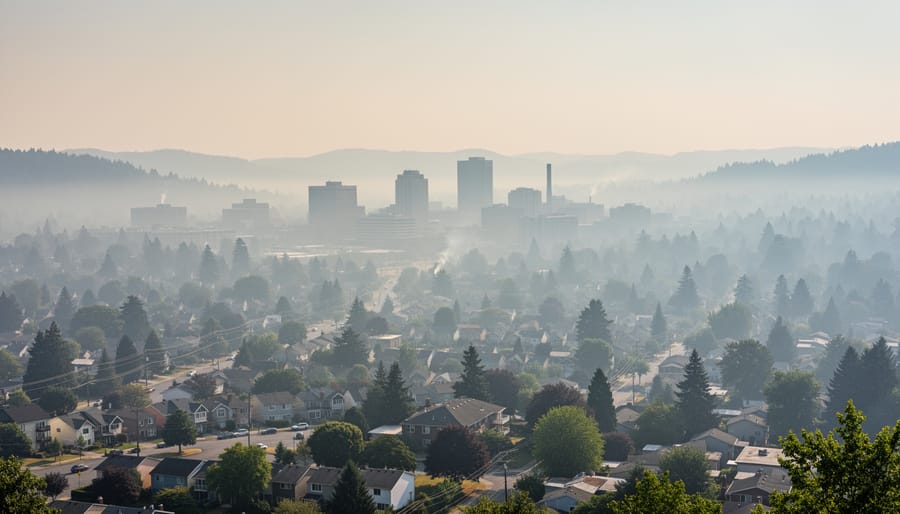
Environment and Climate Change Canada operates a network of ground-level monitoring stations across British Columbia, including the interior regions where Vernon is located. These automated stations run continuously, measuring concentrations of pollutants like fine particulate matter (PM2.5), ground-level ozone, nitrogen dioxide, and sulphur dioxide. Sensors collect readings at regular intervals throughout the day, transmitting data to central systems that calculate real-time air quality indices.
The monitoring network relies on several integrated components:
- Fixed monitoring stations positioned in representative locations across communities and regions
- Calibrated sensors that detect specific pollutants at parts-per-million or microgram-per-cubic-meter levels
- Hourly data collection and transmission to Environment Canada’s analysis systems
- Alert thresholds tied to the Air Quality Health Index scale, triggering public warnings when readings reach yellow level or higher
When pollutant concentrations rise above established thresholds, Environment Canada meteorologists analyze the data alongside weather forecasts to determine alert severity and expected duration. The July 15, 2026 alert for Vernon came after PM2.5 readings climbed into the yellow-level range, prompting the agency to issue public health guidance recommending residents stay indoors. These alerts remain active until monitoring data shows sustained improvement and weather patterns indicate clearing conditions.
Local authorities also use this monitoring data for operational decisions. The closure of Lakeview Pool on July 31 reflected Vernon’s municipal staff responding to current air quality readings, protecting residents from prolonged outdoor exposure during elevated pollution levels. Pool operators, recreation departments, and event organizers across BC regularly check Environment Canada’s real-time data portal to make these calls, balancing public access with health protection. The system works because continuous monitoring gives officials concrete numbers to act on rather than guesswork about air safety.
Understanding the Air Quality Health Index
The Air Quality Health Index is a ten-point scale Environment and Climate Change Canada uses to tell you how air pollution affects your health right now and what to expect over the next few hours. Unlike a simple “good” or “bad” rating, the AQHI combines readings of three pollutants, ground-level ozone, particulate matter, and nitrogen dioxide, into one number that reflects actual health risk.
The scale runs from 1 to 10+, divided into four categories. A reading of 1-3 is low risk, meaning air quality is fine for everyone. A 4-6 is moderate risk, where sensitive people might notice mild symptoms. The 7-10 range marks high risk, when anyone doing strenuous outdoor activity should cut back. Anything above 10 is very high risk, triggering alerts like the yellow-level warning Vernon saw on July 15, 2026.
When Environment and Climate Change Canada issues an alert at this level, the guidance gets specific. During the July alert, residents were advised to stay indoors, not just “consider” it, but actually limit outdoor exposure, especially for kids, seniors, and anyone with asthma or heart conditions. That’s why facilities like Lakeview Pool closed on July 31; prolonged outdoor activity becomes a genuine health concern when the index climbs.
Each point on the scale corresponds to measured pollutant concentrations, but what matters to you is simpler: at-risk groups should adjust their plans at moderate levels, and everyone should scale back activity when the index hits high or very high. The system updates hourly, so checking before you head out lets you decide whether to reschedule that run or keep the kids inside until conditions improve.
What Causes Poor Air Quality in Vernon
How Wildfire Smoke Affects Air Quality
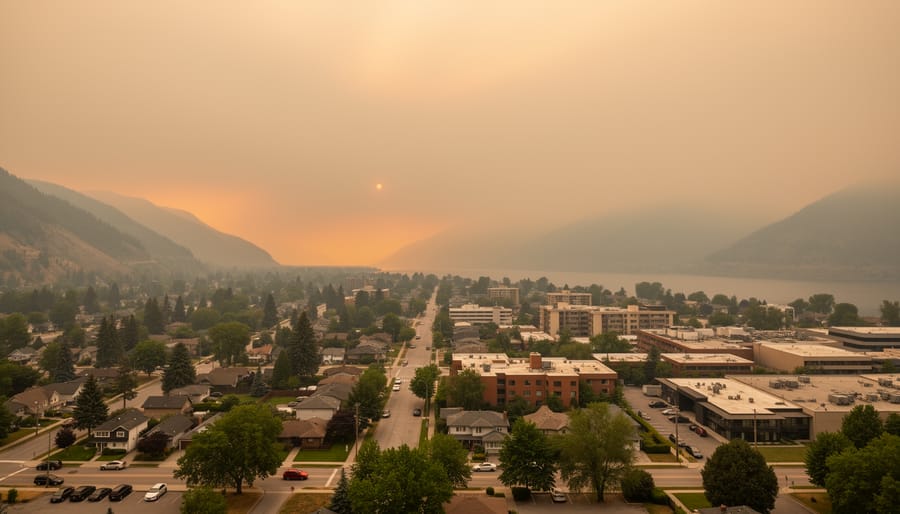
Wildfire smoke contains a mix of fine particulate matter, gases, and water vapor that can travel hundreds of kilometers from the fire source. The most harmful component is PM2.5, particles less than 2.5 micrometers in diameter that can penetrate deep into your lungs and even enter your bloodstream. These particles come from burning trees, vegetation, and organic matter, carrying chemicals that irritate your respiratory system.
Smoke travels based on wind patterns, atmospheric conditions, and topography. BC’s interior valleys, including the Vernon area, can trap smoke for days when high-pressure systems stall or when winds push smoke from distant fires into the region. The same geography that creates the area’s scenic landscapes can funnel and hold smoke, turning a fire burning hundreds of kilometers away into a local health concern that triggers extreme weather updates and air quality alerts.
When smoke concentrations rise, you’ll notice reduced visibility, that hazy sky isn’t just aesthetics. It signals elevated particle levels that make breathing harder, especially during physical activity. Your lungs work overtime filtering particles that wouldn’t normally be present. People with asthma or other respiratory conditions often feel the impact first, experiencing coughing, throat irritation, or shortness of breath. Even healthy adults may notice chest tightness or fatigue when PM2.5 levels climb during yellow-level or higher alerts, which is why guidance to stay indoors becomes critical during smoke events.
Health Risks and Who Should Take Extra Precautions
Poor air quality doesn’t affect everyone the same way. When Environment and Climate Change Canada issues a yellow-level alert like the one Vernon saw in July 2026, certain groups face significantly higher health risks than the general population.
Children are particularly vulnerable because their respiratory systems are still developing and they breathe more rapidly than adults. During poor air quality episodes, kids inhale more pollutants relative to their body weight. That’s exactly why facilities like Lakeview Pool made the call to close on July 31, keeping children indoors during elevated air quality readings protects developing lungs from unnecessary exposure.
Older adults face increased risks too, especially those over 65. Age-related changes to lung function mean the body processes airborne pollutants less efficiently. People with existing respiratory conditions such as asthma, COPD, or chronic bronchitis should take alerts seriously. Even moderate air quality can trigger symptoms or worsen existing breathing problems.
Anyone with cardiovascular disease also falls into the high-risk category. Fine particulate matter can enter the bloodstream and stress the heart, raising the risk of heart attacks or strokes during prolonged exposure.
- Coughing or throat irritation that worsens outdoors
- Shortness of breath or chest tightness
- Wheezing or difficulty breathing deeply
- Unusual fatigue during normal activities
- Eye irritation or excessive watering
- Headaches that develop after outdoor exposure
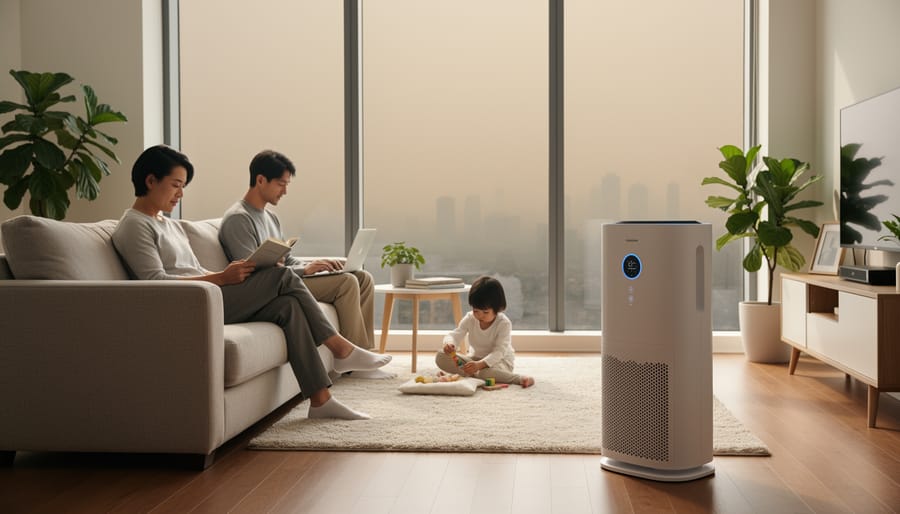
The stay-indoors guidance isn’t just precautionary language. When air quality reaches yellow-level thresholds, even healthy adults can experience reduced lung function. Indoor air typically contains far fewer pollutants than outdoor air during smoke events, making it the safest place to spend your day until conditions improve. If you notice any warning symptoms, especially if you’re in a vulnerable group, limit outdoor time and monitor how you feel. When alerts persist for days, consider using air purifiers indoors and keeping windows closed to maintain better air quality inside your home.
How to Check Current Air Quality Conditions
Checking current air quality conditions in Vernon is straightforward once you know where to look. Environment and Climate Change Canada operates the primary monitoring network for British Columbia and posts readings to their website and weather app. You can search for “Vernon air quality” directly or navigate to their Air Quality Health Index portal to see the current reading and a forecast for the next day or two. The AQHI updates hourly during normal conditions and more frequently during active alerts.
The BC government also maintains AirBC, a provincial air quality monitoring site with real-time data from stations across the province. This platform lets you compare Vernon’s readings to nearby communities and view historical trends, which is useful if you’re planning outdoor activities for the coming week. Both federal and provincial sites display the same numeric AQHI scale, so you’ll get consistent information regardless of which source you check.
Most weather apps now include air quality alongside temperature and precipitation. If you’re already using an app to check Vernon weather, similar to how you might use a real-time radar to track approaching storms, look for an air quality tab or widget. These apps pull from official monitoring networks and translate the index into simple health guidance.
For context, the same type of monitoring technology used in weather tools like a storm tracker feeds into air quality systems, combining atmospheric readings with ground-level sensors. Check conditions before heading out for a run or taking kids to the park, especially during wildfire season when readings can shift quickly.
Frequently Asked Questions About Vernon Air Quality
Readers often have practical questions when air quality alerts affect daily life in Vernon and the BC interior. Here are answers to common concerns about monitoring, health risks, and protective steps.
How long do air quality alerts typically last in Vernon?
Alert duration varies based on weather patterns and pollution sources. Wildfire smoke alerts can persist for several days or even weeks during active fire seasons, while alerts from other sources may lift within 24 to 48 hours once conditions improve.
Is the air inside my home safe during an air quality alert?
Indoor air is generally safer than outdoor air during alerts, but smoke particles can still enter homes through ventilation systems and gaps. Keep windows and doors closed, use HEPA air filters if available, and avoid activities that create indoor pollutants like smoking or burning candles.
When is it safe to resume outdoor exercise after an alert?
Wait until Environment and Climate Change Canada officially lifts the alert and the Air Quality Health Index returns to low-risk levels (1-3). Even after an alert ends, check current readings before intense outdoor activities, especially if you’re in a sensitive group.
How accurate are air quality forecasts for Vernon?
Forecasts are generally reliable for predicting trends 24 to 48 hours ahead, though wildfire smoke movement can be unpredictable due to shifting winds. Local monitoring stations provide the most current real-time data, which is more reliable than forecasts during rapidly changing conditions.
Beyond these basics, people wonder about economic ripple effects. Poor air quality can lead to event cancellations, reduced tourism, and operational impacts like the Lakeview Pool closure on July 31, which affected recreation schedules. These disruptions sometimes parallel other regional economic pressures, from fuel price impacts to seasonal business cycles that affect southern Alberta and BC interior communities alike.
If you’re sensitive to air pollution, don’t wait for official alerts to take precautions. Monitor readings daily during wildfire season, keep a stock of N95 masks, and have a plan for indoor activities when conditions deteriorate. The monitoring system gives you tools to protect yourself, but only if you check the data and act on it before symptoms develop.