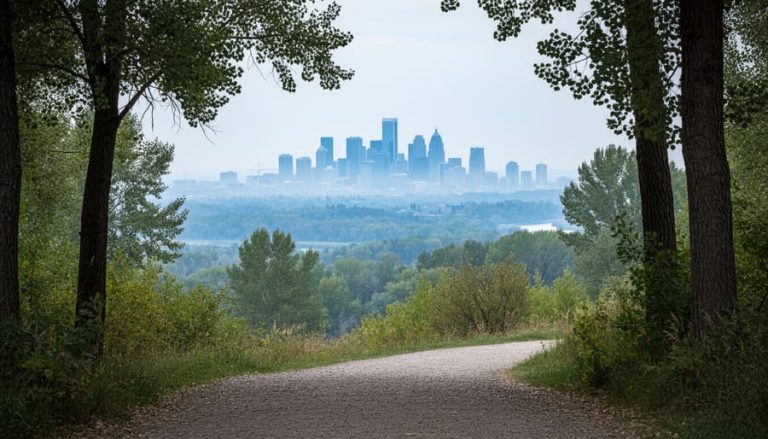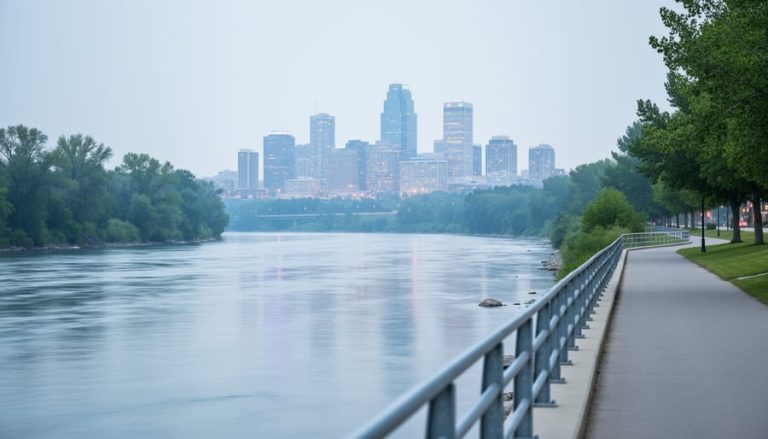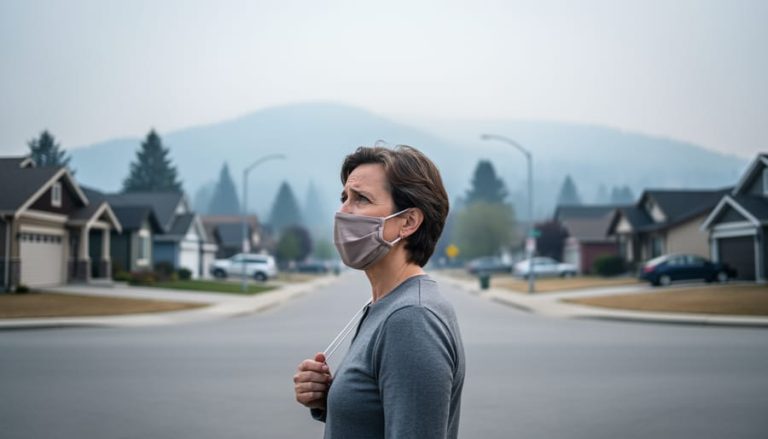
Calgary’s current air quality sits at Low Risk (AQHI 3), and Environment and Climate Change Canada forecasts it will hold steady through Wednesday at the same low level. That’s good news if you’re planning outdoor activities, but knowing where to check this forecast regularly and what the numbers actually mean can help you make smarter decisions about everything from morning runs to playground time with kids.
Southern Alberta residents have become increasingly aware of air quality issues, particularly during wildfire season when smoke can drift across the province and settle over Calgary for days. The Air Quality Health Index isn’t just a number on a government website. It’s a joint initiative from Environment Canada, Health Canada, Alberta Environment and Protected Areas, and Alberta Health Services designed to translate complex air pollution data into something you can actually use.
The system runs on a simple 1-10+ scale broken into four risk categories: Low (1-3), Moderate (4-6), High (7-10), and Very High (above 10). Each level comes with specific health recommendations, from “enjoy your usual outdoor activities” at Low Risk to “consider reducing or rescheduling strenuous activities outdoors” when numbers climb higher.
What makes Calgary’s forecast particularly useful is that Environment Canada updates observed conditions daily and provides rolling 24-hour forecast maximums so you can plan ahead. Whether you’re managing asthma, training for a marathon, or just deciding whether the kids should bike to school, having advance notice of air quality shifts gives you time to adjust.
What the Air Quality Health Index (AQHI) Measures in Calgary
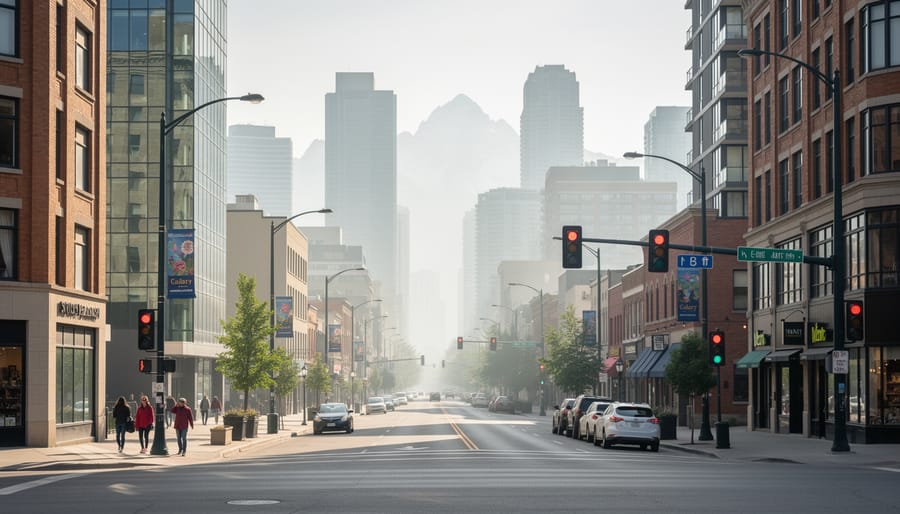
Environment and Climate Change Canada runs the AQHI system in partnership with Health Canada, Alberta Environment and Protected Areas, Alberta Health, and Alberta Health Services. The index doesn’t just measure pollution levels, it assesses health risk by combining readings from three key pollutants: ground-level ozone, nitrogen dioxide, and fine particulate matter (PM2.5). These three are tracked continuously at monitoring stations across Calgary, and the AQHI uses specific pollutants because they pose the greatest risk to respiratory and cardiovascular health, even at relatively low concentrations.
The calculation happens automatically every hour, pulling in real-time pollutant data and converting it into a single number on a ten-point scale. Calgary’s current readings, calculated at 11:00 PM MDT on Monday, August 17, 2026, show how this works in practice, observed conditions and forecast maximums are both expressed as a number paired with a risk category.
The scale breaks into four tiers. A reading of 1 to 3 falls under Low Risk, meaning air quality poses minimal concern for most people. Moderate Risk spans 4 to 6, where sensitive individuals might notice minor symptoms during prolonged outdoor activity. High Risk covers 7 to 10, prompting vulnerable groups to reduce or reschedule strenuous outdoor exercise. Anything above 10 triggers Very High Risk, when even healthy adults should consider limiting time outside. Right now, Calgary’s forecast shows consistent Low Risk readings, Monday night through Wednesday all sit at 3, but the AQHI low to very high range exists precisely because southern Alberta can experience rapid shifts, especially during wildfire season or temperature inversions that trap pollutants close to the ground.
Understanding what the numbers represent helps you decide when outdoor plans need adjustment and when the air is safe for everyone.
How to Access Calgary’s Air Quality Forecast
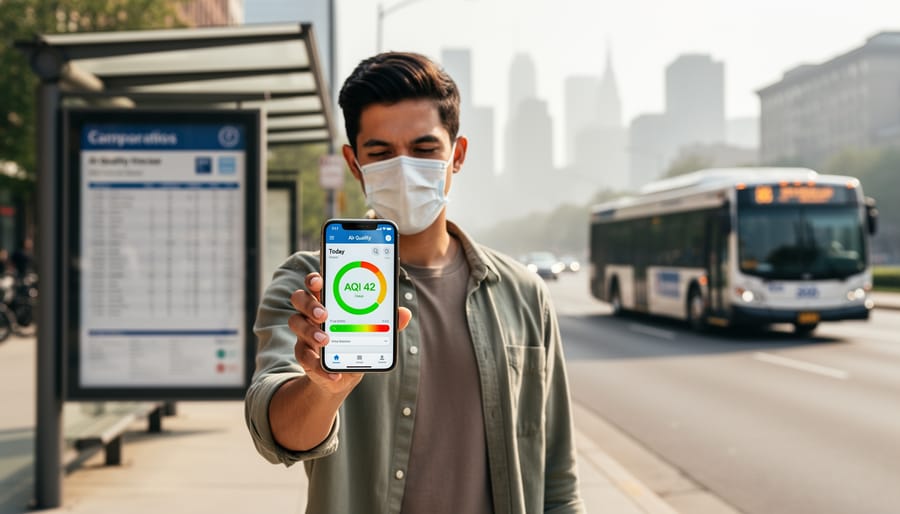
Getting your hands on Calgary’s official air quality forecast takes about thirty seconds, and it’s completely free. Environment and Climate Change Canada maintains a dedicated AQHI page for Calgary that updates daily, no app download required, no account to create.
Head straight to the Environment Canada Air Quality Health Index portal and search for “Calgary” or navigate through Alberta’s city listings. The page displays two key pieces of information: observed conditions (the current reading) and forecast maximums for the next 24 hours. You’ll see a simple table breaking down predictions by time period, typically tonight, tomorrow during the day, tomorrow night, and the following day.
The system calculates new data at 11:00 PM MDT each night, so checking first thing in the morning gives you the freshest forecast for the day ahead. The observed reading updates throughout the day as monitoring stations collect pollutant data, but the forecast maximums, the highest level expected during each period, stay stable until the next nightly calculation.
Bookmark the Calgary-specific page rather than the general AQHI homepage. That way you skip the navigation steps and land directly on local forecasts. The interface works on any device, from desktop computers to smartphones, and loads quickly even on slower connections.
If you prefer automated updates, some weather apps now integrate AQHI data, though Environment Canada’s site remains the authoritative source. Cross-checking ensures you’re seeing the official forecast that health authorities use for public advisories.
Reading Your Calgary Air Quality Forecast
When you visit Environment Canada’s Calgary AQHI page, you’ll see observed conditions calculated at 11:00 PM MDT each day, plus forecast maximums covering the next 24 hours. The forecast breaks down into time blocks, typically showing tonight, tomorrow, tomorrow night, and the following day. Each period displays a number on the 1-10 scale alongside its corresponding risk category.
The numbers represent predicted maximum levels during each timeframe, not averages. If Tuesday shows “3 – Low Risk,” that’s the highest air quality reading expected that day. During stable weather patterns, you might see consistent readings across multiple days. For example, a forecast showing Monday night through Wednesday all at 3 means southern Alberta’s air quality should remain in the low-risk range throughout that period, making it safe for everyone to proceed with normal outdoor plans.
Changes between updates reflect new weather data, pollution sources like traffic patterns or distant wildfire smoke, and atmospheric conditions. If you’re planning outdoor activities for the next day, checking after the 11:00 PM update gives you the most current prediction. For time-sensitive decisions, like scheduling a morning run or an afternoon sports practice, knowing whether the forecast shows low risk (1-3) or moderate risk (4-6) helps you adjust timing or intensity accordingly.
What Different Risk Levels Mean for Southern Alberta Residents
Understanding what each risk level means helps you make informed decisions about outdoor activities, exercise plans, and protective measures for vulnerable family members.
| AQHI Range | Risk Category | Who Should Pay Attention | Recommended Actions |
|---|---|---|---|
| 1-3 | Low Risk | Everyone can enjoy outdoor activities | No restrictions needed; ideal conditions for all ages and fitness levels |
| 4-6 | Moderate Risk | Children, seniors, those with heart or lung conditions | At-risk groups should consider reducing intense outdoor exercise; general population can proceed normally |
| 7-10 | High Risk | Children, seniors, anyone with respiratory or cardiovascular issues | Vulnerable populations should reduce or reschedule strenuous outdoor activities; active adults may notice discomfort |
| Above 10 | Very High Risk | Everyone, especially vulnerable groups | Avoid outdoor exertion; vulnerable individuals should stay indoors; postpone outdoor events when possible |
Low Risk days, like the current forecast showing levels of 3 across Calgary, mean you can proceed with normal routines. Morning jogs, playground time for kids, and outdoor work present no air quality concerns. This is the baseline condition southern Alberta residents experience most of the year.
When readings climb to Moderate Risk, parents with asthmatic children should watch for symptoms during high-energy play. Seniors with heart conditions might choose a gentler walk instead of a vigorous hike. If you’re training for a marathon or doing heavy yard work, you’ll likely feel fine, but those with existing health issues may notice shortness of breath or chest tightness.
High Risk levels require real adjustments. Youth sports coaches should shorten practice sessions and increase water breaks. Construction workers and landscapers, especially those with respiratory conditions, benefit from scheduling demanding tasks for cooler morning hours when pollution typically drops. This is when checking real-time smoke maps becomes particularly valuable during wildfire season.
Very High Risk readings are rare in Calgary but do occur during severe wildfire events. These conditions warrant canceling outdoor sports tournaments, keeping vulnerable family members indoors with windows closed, and running air purifiers if available. Even healthy adults often experience eye irritation and breathing discomfort during prolonged exposure at this level.
Common Questions About Calgary’s Air Quality Forecast
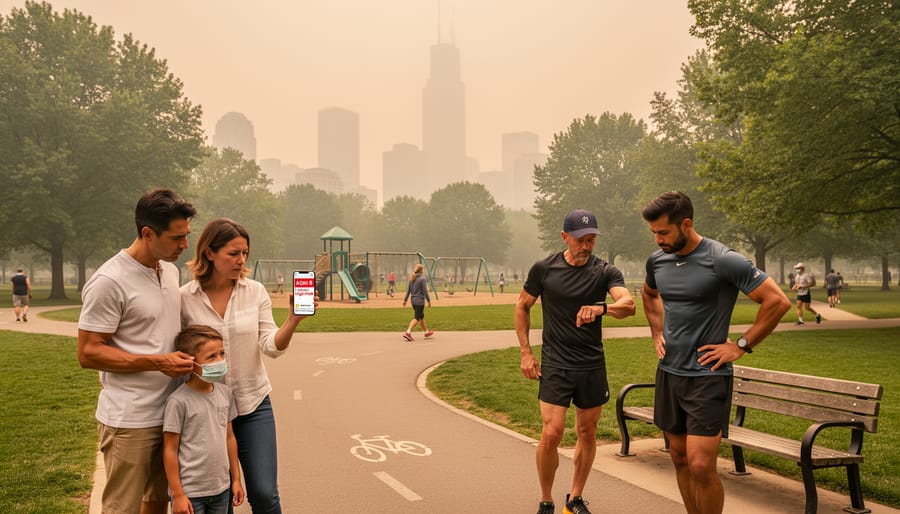
Forecasts shift when new atmospheric data comes in, weather patterns change, smoke plumes move, or emissions fluctuate, so checking back later in the day makes sense if conditions look different than expected. Calgary’s air quality can worsen from vehicle traffic during rush hours, industrial emissions, temperature inversions that trap pollutants close to the ground, or wildfire smoke drifting in from British Columbia or northern Alberta. The 24-hour AQHI predictions are generally reliable for stable weather, but sudden wind shifts or unexpected smoke can alter conditions quickly, which is why Environment Canada recalculates the index nightly at 11:00 PM MDT.
Is the AQHI the same as a smog alert?
No. The AQHI is a daily health risk index covering multiple pollutants, while smog alerts are issued only when ground-level ozone or particulate matter reaches specific thresholds that pose immediate health concerns.
Who provides Calgary’s air quality forecast?
Environment and Climate Change Canada calculates the AQHI in partnership with Health Canada, Alberta Environment and Protected Areas, Alberta Health, and Alberta Health Services.
Why do forecasts sometimes change during the day?
Updates reflect new weather data, shifting wind patterns, or unexpected emission events. The official forecast is recalculated each night, but conditions can evolve between updates.
The AQHI isn’t a pollution measurement in micrograms, it’s a health risk number designed for quick decisions. Understanding that distinction helps you respond appropriately when you see extreme weather safety guidance paired with elevated AQHI levels, especially during hot summer days when ozone concentrations rise. Staying informed about air quality changes across Canadian cities also gives you context for how Calgary’s conditions compare regionally and what seasonal patterns to expect.
Checking Calgary’s air quality forecast takes less than a minute, but it can shape your entire day, especially during wildfire season when smoke drifts across southern Alberta, or on high-traffic days when vehicle emissions spike. Bookmarking Environment Canada’s AQHI page means you’ll always know whether it’s a great morning for a run along the Bow River or a day to keep vulnerable family members indoors.
Air quality affects all of us, from kids playing soccer in Nose Hill Park to seniors gardening in their backyards. Share what you’ve learned about the AQHI with neighbors, coworkers, and friends, many Calgarians don’t realize this free forecast exists or how easy it is to use. The more our community understands these daily numbers, the better we can protect each other’s health and enjoy southern Alberta’s outdoor lifestyle safely year-round.
What’s your experience with Calgary’s air quality? Have wildfire smoke or seasonal changes affected your outdoor plans? Join the conversation and share your tips for staying informed.