Montreal’s air quality is currently good, with the Air Quality Health Index sitting at a low-risk level of 3 as of Saturday evening. If you’ve been checking conditions ahead of travel plans or managing health concerns, you can breathe easier knowing the city’s monitoring systems show favorable conditions through the weekend, with only a slight uptick to moderate risk expected Sunday and Monday.
For those of us in southern Alberta familiar with wildfire smoke alerts and the sudden scramble to check air quality apps, Montreal’s situation offers an interesting contrast. The city relies on a coordinated network managed by Quebec’s environment ministry and the City of Montreal itself, tracking pollutants in real time much like our systems here track conditions during fire season. The difference? Montreal’s air quality challenges tend to center on urban pollution and humidity-driven smog rather than the smoke events we monitor so closely.
Understanding what these numbers actually mean matters more than the ratings themselves. A rating of 3 means healthy people can enjoy outdoor activities without concern, while those with respiratory conditions should simply watch for any symptoms. When the forecast shows a jump to 4 (moderate risk) on Sunday, it’s a signal for sensitive groups to consider dialing back strenuous outdoor exercise, not a call to stay indoors.
What Montreal’s Air Looks Like Right Now

As of 5:00 PM EDT Saturday, Montreal’s air is about as clean as it gets. The current Air Quality Index sits at “Good” while the Air Quality Health Index (AQHI) registers a 3, classified as “Low Risk.” For anyone walking downtown, jogging on Mont Royal, or letting kids play in Parc La Fontaine, that means you can breathe easy, literally.
Here’s what those numbers actually mean in real terms. An AQHI of 3 puts Montreal in the sweet spot where air quality poses minimal health risk. You don’t need to think twice about that morning run or afternoon bike ride. Sensitive groups like young children, seniors, and people managing asthma or heart conditions can go about their usual routines without adjusting their plans. It’s the kind of air quality that should be the norm, not the exception.
But if you’re planning outdoor activities for the next few days, the forecast shows conditions shifting slightly:
| Time Period | AQHI Level | Risk Category | What It Means |
|---|---|---|---|
| Saturday Night | 3 | Low Risk | Ideal for all outdoor activities |
| Sunday | 4 | Moderate Risk | Consider reducing intense outdoor activity if you’re sensitive |
| Sunday Night | 3 | Low Risk | Back to ideal conditions |
| Monday | 4 | Moderate Risk | Same guidance as Sunday |
That bump to a 4 on Sunday and Monday doesn’t mean you’re breathing toxic air. Moderate Risk simply suggests that people with respiratory sensitivities might want to dial back marathon training or move strenuous workouts to the early morning when air tends to be cleaner. For most residents and visitors, you won’t notice the difference at all. It’s a reminder that air quality isn’t static, it shifts with weather patterns, traffic volume, and atmospheric conditions, even in cities known for generally clean air.
Why Air Quality Swings Matter (Even in ‘Good’ Cities)
Even when a city earns “Good” ratings most days, air quality isn’t static. Montreal’s current Low Risk reading represents a snapshot, not a permanent condition, and understanding why those numbers shift helps you make smarter decisions about your day.
Weather patterns drive the biggest swings. Temperature inversions trap pollutants close to ground level, turning a clear morning into a hazy afternoon. Wind direction matters too: a breeze from industrial zones carries different air than one sweeping in from the St. Lawrence. Summer humidity amplifies ground-level ozone formation, while winter brings particulate matter from heating systems and road salt dust stirred by traffic.
Speaking of traffic, rush hour isn’t just about congestion. Vehicle emissions concentrate during morning and evening peaks, creating localized spikes that monitoring stations detect within hours. Construction activity, seasonal pollen loads, and even wildfires hundreds of kilometers away can nudge readings from Low to Moderate Risk, sometimes overnight. This kind of shift is what triggers alerts in other cities, too, understanding how these warnings work gives you context for any air quality warning explained in your own region.
For people with asthma, COPD, or heart conditions, these fluctuations aren’t abstract. A jump from AQHI 3 to 4 means adjusting workout intensity or timing outdoor exercise earlier in the day. Parents planning playground time, runners mapping routes, and seniors considering morning walks all benefit from checking current conditions rather than assuming yesterday’s “Good” still applies.
How Montreal Tracks the Air You Breathe
Montreal’s air quality readings you see online come from a surprisingly robust network of monitoring stations scattered across the island and surrounding regions. Quebec’s ministère de l’Environnement et de la Lutte contre les changements climatiques runs the provincial network, while the City of Montréal operates its own complementary stations. Together, they track particulate matter, ground-level ozone, nitrogen dioxide, and other pollutants in real-time, feeding data into the AQHI forecasts that get updated throughout the day.
The stations measure actual air samples continuously, sending readings to centralized systems that crunch the numbers and spit out those AQI and AQHI scores. When you check Montreal’s air quality at 5:00 PM on a Saturday, you’re seeing data that’s only minutes old, pulled from multiple sensors across different neighbourhoods to give you a city-wide picture.
Alberta uses a similar setup through Environment and Climate Change Canada and provincial monitoring, but the AQHI scale works the same way whether you’re in Montreal or Calgary. Both systems rank air quality from Low Risk to Very High Risk, making it easy to compare conditions if you’re planning a trip east or just curious how your city stacks up. The main difference is geography: Montreal’s proximity to the St. Lawrence and its valley topography can trap pollutants differently than Calgary’s prairie winds and chinooks clear them out.
This infrastructure isn’t flashy, but it’s what turns invisible air into actionable information.
What You Should Do When Air Quality Shifts
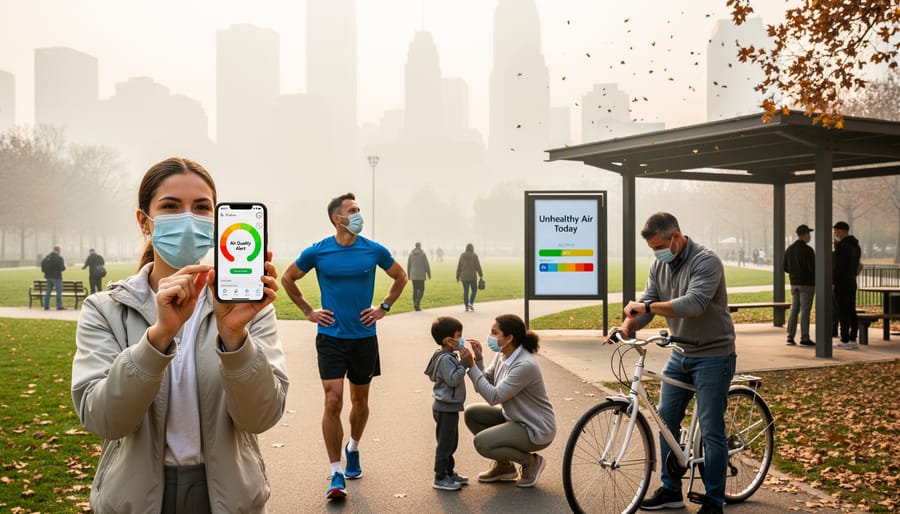
When Montreal’s AQHI climbs from Low to Moderate Risk (as it’s forecast to do Sunday and Monday), most people won’t notice a difference in how they feel. The air remains safe for typical outdoor activities, jogging, cycling, and playground time. But if you fall into a sensitive group, children, older adults, or anyone managing asthma, COPD, or heart conditions, that shift matters.
For the rest of us, Moderate Risk days don’t require major changes. You can still hit the trails or walk the dog, but if you’re planning a marathon training run or hosting an outdoor sports tournament, consider dialing back the intensity or scheduling it for early morning when pollutant levels tend to be lower. Think of it the way you’d approach extreme hot weather safety adjust, don’t cancel.
Staying informed is straightforward. Environment Canada’s Air Quality Health Index updates hourly for Montreal, and you can check readings the same way you’d pull up a live weather radar before heading out. The Quebec government’s website posts forecasts for the day ahead, issued twice daily at 5 AM and 5 PM EDT. If you’ve got health concerns, make it part of your morning routine alongside checking the temperature. When the number creeps up, shift your plans rather than skipping them entirely.
Whether you’re planning a trip to Montreal or checking conditions here at home, the air you breathe deserves a few seconds of your attention. Real-time monitoring isn’t just for people with asthma or respiratory conditions, it’s for anyone who runs, bikes, or spends time outside with kids. Montreal’s current Good reading and Alberta’s own monitoring networks make it easier than ever to make informed choices about when to head outdoors and when to adjust your plans.
The shift from Low to Moderate Risk we’re seeing in Montreal’s forecast is a reminder that air quality changes quickly. What looks perfect on Saturday can shift by Sunday afternoon. Checking the AQHI before you lace up your running shoes or plan that afternoon at the park takes less time than scrolling through social media, and it can make a real difference in how you feel.
Have you ever adjusted your plans based on air quality warnings? Maybe wildfire smoke changed your summer, or you’ve noticed certain days just feel harder to breathe. We’d love to hear how you keep tabs on the air around you, whether you’re in Calgary, Montreal, or anywhere in between. The conversation around air quality affects all of us, and your experience matters.