If you’ve just received a tornado warning alert on your phone or heard it on the radio, here’s what you need to do right now: get to the lowest floor of a sturdy building, move into an interior room away from windows, and stay there until the warning lifts. A tornado warning means Environment and Climate Change Canada has confirmed a tornado is already happening or will strike within minutes, either through direct sighting or weather radar detection.
This isn’t a drill or a heads-up that conditions look bad. That’s what a tornado watch covers. A warning is the real deal, and southern Alberta sees these alerts more often than many residents realize, especially during summer storm season when conditions can shift fast across the prairies.
If you’re in a mobile home, vehicle, or caught outside, abandon that location immediately and find the nearest solid structure. Mobile homes offer almost no protection, and trying to outrun a tornado in your car is a dangerous gamble. Cover your head and neck with your arms, and shield yourself from flying debris, which causes most tornado injuries.
The next few minutes matter. Environment Canada issues these warnings through their official weather site and the national Alert Ready system, so if your device just buzzed, that’s your cue to move now. We’ll walk you through exactly what to do in different situations, how long to shelter, and where to find live updates as the storm passes.
What a Tornado Warning Actually Means
When you hear “tornado warning,” it’s time to move now, not in five minutes. A tornado warning means a tornado has been spotted by trained observers or detected on weather radar, and it’s either already happening or about to strike in the warned area. This isn’t a heads-up about possibilities. It’s confirmation that the danger is real and immediate.
Environment and Climate Change Canada issues these warnings for southern Alberta when their meteorologists identify tornado signatures on radar or receive confirmed visual reports from storm spotters. The moment they issue a warning, Alert Ready kicks in. That’s the system that sends the jarring alarm to your phone, interrupts radio broadcasts like Calgary Now, and breaks into TV programming with that unmistakable tone. Your device doesn’t need a special app. Alert Ready uses Canada’s wireless network to reach every compatible phone in the affected area, which is why your screen suddenly lights up with that emergency message even if your phone is on silent.
The warning tells you which specific areas are under threat and how long the danger is expected to last, usually in 30 to 60-minute windows. Environment Canada doesn’t issue these lightly. By the time that alert hits your phone, meteorologists have already confirmed rotation in the storm cloud or someone has eyes on a funnel cloud. You’re not being asked to prepare. You’re being told to act.
Your First 60 Seconds: Immediate Actions to Take
The moment you hear the Alert Ready siren or see a tornado warning notification flash across your screen, you have one job: get to safety right now. Don’t spend time gathering belongings, checking social media, or looking out the window to see if you can spot the tornado. Every second counts when a tornado is bearing down on your location.
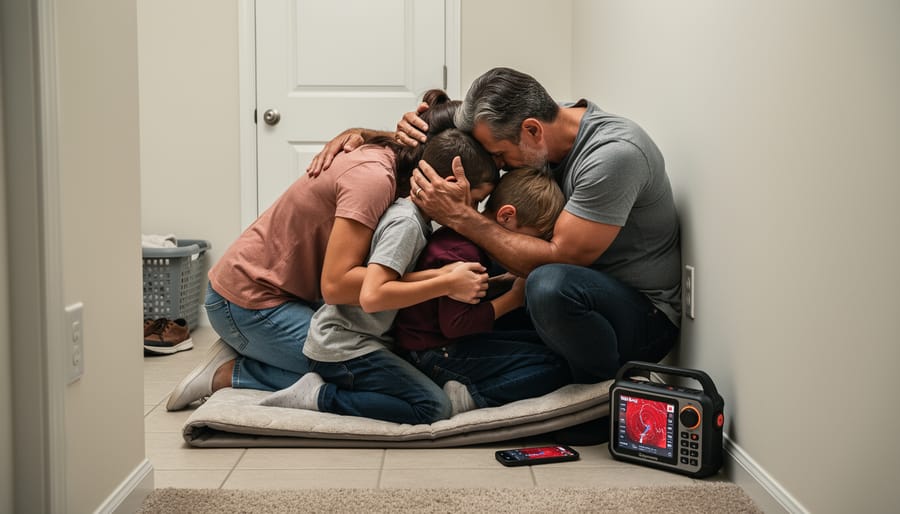
If you’re inside a sturdy building, head immediately to the lowest floor. Basements offer the best protection, but if you don’t have one, move to an interior room or hallway on the ground floor. The goal is to put as many walls as possible between you and the outside. Interior bathrooms, closets, and small rooms near the centre of the building work well because they’re typically surrounded by other rooms and have no windows.
Stay away from windows and exterior walls. Flying glass and debris are among the most common causes of tornado injuries. Once you’re in your shelter spot, get low and protect your head and neck. Crouch down, tuck your head, and cover it with your hands, or pull a heavy coat, blanket, or even a mattress over yourself if you have seconds to grab one.
If you’re in a mobile home when the warning sounds, leave it immediately. Mobile homes offer virtually no protection against tornadoes, even if they’re tied down. Get to the nearest sturdy building if one is close by. The same goes if you’re in a vehicle: abandon it for proper shelter if you can reach one within seconds. If you’re caught outdoors with no building in sight, lie flat in a ditch or low-lying area and cover your head, though this is a last resort, not a safe plan.
Don’t waste time deciding whether the warning applies to you or wondering if the storm will miss your neighbourhood. Act first, assess later.
The Best and Worst Places to Shelter
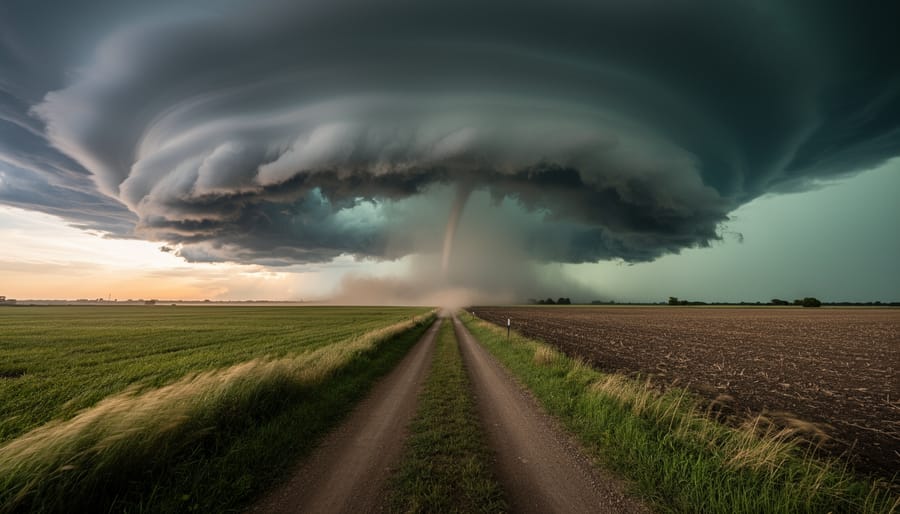
When a tornado warning is issued, where you shelter can mean the difference between life and death. Not all rooms and buildings offer the same level of protection, and knowing which spaces are safest before severe weather arrives gives you precious seconds when every moment counts.
The gold standard for tornado shelter is a basement, particularly in an interior corner away from windows. Get under a sturdy table or workbench if possible, and cover yourself with blankets or a mattress to protect against flying debris. If your basement has windows, stay on the opposite side of the room from them. Interior bathrooms on the ground floor are your second-best option, the plumbing adds structural support, and the small space means fewer penetration points for debris. Interior closets, hallways without windows, and stairwells also provide good protection because they’re reinforced by surrounding walls on multiple sides.
Avoid upper floors, rooms with large windows, and spaces with wide, unsupported spans like gyms or auditoriums. These areas collapse more readily and expose you to flying glass and debris. Corner rooms with exterior walls are nearly as dangerous as being outside.
Pros
- Basements offer below-ground protection from most tornado winds and debris
- Interior bathrooms have reinforced plumbing that adds structural strength
- Small interior rooms limit the number of walls exposed to wind pressure
- Ground-floor locations reduce the risk of floor collapse from above
Cons
- Not all buildings have basements, especially in rural Alberta
- Mobile homes offer virtually no protection and should be abandoned immediately
- Large agricultural buildings like barns can collapse quickly in tornado winds
- Windowless interior spaces may not exist in small homes or older structures
For rural Albertans, the situation gets trickier. Barns, sheds, and metal outbuildings collapse easily under tornado-force winds, they’re death traps, not shelters. If you’re working in one when a warning comes through, run to your house or the nearest sturdy building immediately. If you’re truly caught in an open field with no building in sight, your last resort is to lie flat in a low spot like a ditch or ravine, cover your head with your hands, and stay as low to the ground as possible. It’s not ideal, but it’s better than being struck by debris while standing or running.
When You’re Caught Outside or in a Vehicle
If you’re in your car when the tornado warning comes through, your instinct might be to keep driving. Don’t. A tornado can flip or toss a vehicle in seconds, and you can’t outrun it. Your best move is to abandon your car immediately and get into the nearest sturdy building, a gas station, restaurant, or any structure with interior rooms. Leave the vehicle where it is and run.
No building in sight? You’re facing the worst-case scenario. Lie flat in the lowest spot you can find, a ditch or depression in the ground, and cover your head and neck with your hands. Stay as low as possible and wait for the tornado to pass. It’s terrifying, but it gives you a better chance than staying in your car.
Here’s what you absolutely should not do: don’t shelter under an overpass. This myth has been debunked repeatedly by meteorologists and emergency managers. Overpasses create a wind tunnel effect that actually accelerates debris and increases danger. The narrow space traps you with nowhere to go, and you’re exposed to flying objects traveling at lethal speeds.
Ditches aren’t ideal either, but they’re your last resort when you’re caught completely exposed. The goal is to get below ground level and minimize your profile. If you’re outdoors in open farmland or prairie, even lying flat in a field is better than standing or staying in a vehicle. Protect your head, stay down, and don’t move until the immediate danger passes.
How to Stay Informed During Severe Weather
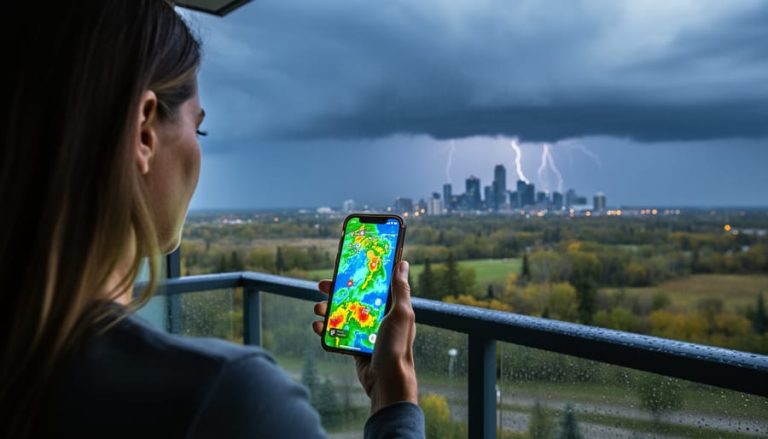
Staying informed before and during severe weather can mean the difference between receiving a lifesaving warning and being caught off guard. Environment Canada’s official weather website is your primary source for tornado warnings, bookmark it now and check it whenever storms threaten. Enable Alert Ready notifications on your smartphone and ensure your device’s location services and wireless emergency alerts are turned on, so you’ll receive immediate warnings even if you’re not actively checking weather sources.
For real-time tracking, use the live weather radar to watch storm cells as they develop and move across southern Alberta. When comparing options, explore the best weather radar tools available for tracking severe weather in your area. Local radio remains essential during power outages or when internet access fails, Calgary Now provides continuous weather coverage during severe events, and battery-powered or car radios work when your phone doesn’t.
Southern Alberta residents should monitor multiple sources during tornado season:
- Environment Canada’s official weather website and mobile app for warnings
- Calgary Now radio for local coverage and real-time updates
- Weather radar tools to track approaching storm systems
- Social media accounts of local emergency services for community-specific alerts
Before severe weather arrives, create a family communication plan that includes where you’ll shelter, how you’ll stay in touch if separated, and a designated out-of-area contact. Practice your plan so everyone knows exactly what to do when warnings interrupt a regular day.
When a tornado warning appears on your phone, you don’t have time to second-guess yourself. Act immediately, every single time. The difference between a safe outcome and a tragedy often comes down to those first critical seconds when you move to shelter instead of watching the sky or grabbing belongings.
Talk with your family tonight about where you’ll go when a warning comes through. Walk to that interior room, basement corner, or bathroom together so everyone knows the plan without thinking. Practice it with kids so they understand this isn’t a drill when it matters.
Southern Alberta’s weather can turn severe without much notice, so staying weather-aware isn’t paranoia, it’s smart planning. The same skills that help you stay safe in emergencies year-round apply when severe weather strikes.
Have you weathered a tornado warning before? Share your experience and what worked for your family in the comments below. And keep Calgary Now on your dial for real-time weather updates when conditions turn threatening across the region.