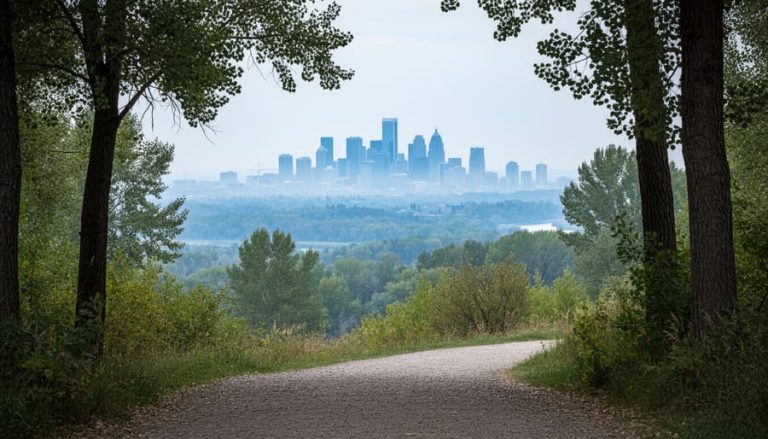
Edmonton’s air quality was a reassuring 3 on the Air Quality Health Index as of 5:00 PM MDT Monday, August 10, 2026. That’s a Low Risk reading, meaning most southern Alberta residents can enjoy outdoor activities without concern. For Calgarians keeping tabs on regional air patterns, this update matters because Edmonton’s readings often signal what’s headed south, and understanding the Index helps you plan outdoor time, exercise routines, and protect vulnerable family members when conditions shift.
The Air Quality Health Index tracks three key pollutants: fine particulate matter (PM2.5), nitrogen dioxide (NO2), and ozone (O3). These substances, whether from traffic, industry, or wildfire smoke, can irritate lungs and complicate breathing for people with asthma, heart conditions, or anyone spending extended time outside. The Index runs from 1 to 10-plus, with Low Risk (1-3) indicating safe conditions, Moderate (4-6) suggesting sensitive groups should reduce intense outdoor activity, and High (7-10) or Very High (10+) meaning everyone should scale back.
Right now, Edmonton’s reading offers good news. But air quality shifts fast, especially during Alberta’s wildfire season and temperature inversions. Checking daily readings before your morning run or planning a child’s outdoor soccer practice isn’t about alarm, it’s about smart planning. Southern Alberta residents know weather and air don’t respect city boundaries, so tracking Edmonton’s numbers gives you a regional snapshot and a heads-up for changing conditions rolling toward Calgary.
What Changed: Edmonton’s Air Quality Right Now
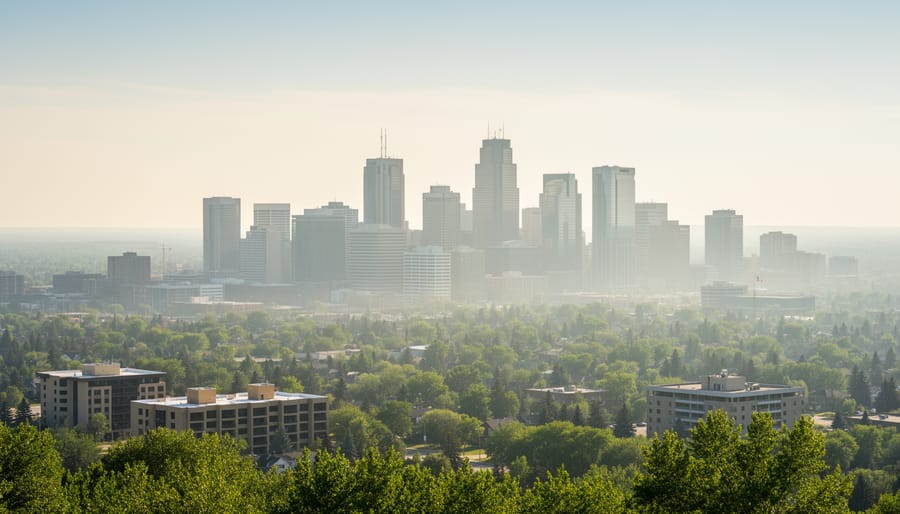
As of the AQHI for Edmonton at 5:00 PM MDT on Monday, August 10, 2026, Edmonton’s air quality sits at a comfortable 3 on the Air Quality Health Index scale, placing it firmly in the Low Risk category. This is good news for residents across the city and those of us in Calgary who keep tabs on northern Alberta’s air conditions.
A Low Risk rating means you can breathe easy, literally. Whether you’re planning an evening walk along the North Saskatchewan River or considering outdoor activities with your kids, the air quality poses no special concern for the general population or even for those with pre-existing respiratory conditions like asthma. This is the kind of reading health officials like to see.
For context, a reading of 3 falls right in line with what Edmonton typically experiences during clear summer periods when wildfire smoke hasn’t drifted into the region and traffic patterns are normal. Calgary residents often check Edmonton’s air quality as an early indicator of weather systems and potential smoke patterns moving south across the province, which is likely why many of you are reading this right now.
Key Developments in Air Quality Monitoring
1. The Three Pollutants Being Tracked
The AQHI uses three pollutants to calculate Edmonton’s air quality rating, and understanding what you’re actually breathing matters for your health. These aren’t abstract chemicals, they’re real particles and gases that show up differently depending on the season, traffic patterns, and what’s burning or running nearby.
Here’s what’s being measured:
- Fine particulate matter (PM2.5): Tiny particles smaller than 2.5 micrometers that come from vehicle exhaust, construction dust, industrial emissions, and wildfire smoke. They penetrate deep into your lungs and bloodstream, triggering asthma, heart problems, and respiratory issues.
- Nitrogen dioxide (NO2): A reddish-brown gas produced mainly by cars, trucks, and power plants. It irritates airways, worsens asthma symptoms, and makes you more vulnerable to respiratory infections.
- Ozone (O3): Ground-level ozone forms when sunlight reacts with pollutants from vehicles and industry. It’s worse on hot, sunny days and causes chest pain, coughing, and throat irritation, especially during outdoor activity.
In Edmonton, PM2.5 spikes during wildfire season (typically May through September), while NO2 stays elevated near major roadways and industrial areas year-round. Ozone becomes the dominant concern on those bright summer days when temperatures climb and sunlight is strong. The current Low Risk reading of 3 means all three pollutants are well within safe ranges right now, but that can shift quickly when weather changes or smoke drifts in from fires burning elsewhere in Alberta or BC.
2. Real-Time AQHI Updates Now Available
The Air Quality Health Index gets updated every hour throughout the day, giving you fresh readings to plan outdoor activities safely. Environment Canada calculates each AQHI score by measuring the three key pollutants, PM2.5, NO2, and O3, across multiple monitoring stations in the Edmonton region, then converting those measurements into a single health-risk number from 1 to 10+. The AQHI calculation time stamp (like Monday’s 5:00 PM MDT reading) tells you exactly when that data was captured, which matters when air quality can shift within hours.
Real-time monitoring helps you make smarter decisions about exercise, outdoor work, or whether to keep kids outside longer. If you’ve got asthma or you’re sensitive to smoke, checking the current number before your morning jog beats relying on yesterday’s forecast. You can access live AQHI data through Environment Canada’s website, provincial air quality portals, or weather apps that pull official government feeds. Calgary residents often check Edmonton alongside local readings to spot regional patterns, smoke drifting south from wildfires or pollution plumes moving with prevailing winds. Pairing the AQHI with real-time smoke maps gives you the full picture of what’s happening across Alberta right now.
3. Regional Air Quality Connections Between Edmonton and Calgary
Calgary residents checking Edmonton’s air quality aren’t just being nosy neighbours, they’re reading the weather map ahead of them. Air masses don’t stop at city limits. When a high-pressure system settles over central Alberta or smoke drifts south from wildfires, both cities often see similar patterns within 24 to 48 hours. Tracking Edmonton’s readings gives Calgary folks advance warning of what might be rolling their way.
The two cities share some pollutant sources but experience them differently. Vehicle emissions and industrial activity affect both urban centres, though Edmonton’s refinery corridor adds heavier NO2 loads during certain wind patterns. When ozone levels spike in Edmonton on hot summer afternoons, Calgary typically sees elevated O3 the same day or next, since both cities bake under similar sunshine and temperature conditions that drive ozone formation.
Distance matters less than you’d think when monitoring regional air quality. The roughly 300-kilometre gap between cities means a weather system or smoke plume moving at typical speeds covers that ground in half a day. If Edmonton hits a Moderate or High risk rating in the morning, southern Alberta residents know to check their own local AQHI by afternoon and adjust outdoor plans accordingly. Regional monitoring turns individual city data into a predictive tool for the whole corridor.
Understanding the Air Quality Health Index Scale

The Air Quality Health Index uses a straightforward 1-10+ scale that tells you at a glance whether it’s safe to head outside or if you should adjust your plans. Here’s how to read it.
Low Risk (1-3): Air quality is good. Everyone can enjoy normal outdoor activities without concern. Right now, Edmonton sits at a 3, which means you can run, bike, or take the kids to the park without worrying about air quality affecting your health.
Moderate Risk (4-6): Most people can still go about their usual routines, but if you have asthma, heart disease, or other respiratory conditions, you might notice symptoms during intense outdoor exercise. Consider taking it a bit easier if you’re in this group.
High Risk (7-10): This is when everyone should start paying attention. People with health conditions should reduce or reschedule strenuous outdoor activities. Even healthy adults might feel effects during prolonged exertion. Think twice about that afternoon run.
Very High Risk (10+): The air quality is poor enough that everyone should avoid outdoor physical activity. Children, seniors, and anyone with heart or lung conditions face serious health risks. Stay indoors with windows closed if possible.
The beauty of the AQHI is its simplicity. You don’t need to understand complex pollutant measurements or do calculations. The number tells you everything you need to know to make smart decisions about your day.
Why Edmonton’s Air Quality Matters to Southern Alberta
Air quality doesn’t respect city limits. When Edmonton’s AQHI reading sits at 3 today, that number tells Calgary residents something valuable about what’s happening across the province. Weather systems, wildfire smoke, and industrial emissions move along predictable corridors through Alberta, often affecting multiple regions within hours or days of each other.
Monitoring Edmonton alongside Calgary helps you spot incoming patterns. A spike in Edmonton’s fine particulate matter often signals smoke drifting south, giving you time to adjust outdoor plans or take health precautions before conditions worsen here. Similarly, ozone buildup in central Alberta during hot summer days frequently shows up in southern communities as the same weather system moves through.
The health stakes are real for vulnerable populations. People with asthma, COPD, or heart conditions need advance warning to manage symptoms and medication. Parents of young children watch multiple cities’ readings to decide whether tomorrow’s playground visit is safe. Seniors planning outdoor activities across the province use regional AQHI data to choose timing and locations wisely.
There’s an economic dimension too. Construction crews, event organizers, and outdoor recreation businesses adjust schedules based on air quality. A “Low Risk” reading in Edmonton today means those planning trips or activities across Alberta can proceed with confidence, while elevated readings anywhere in the province trigger contingency planning.
What to Watch: Air Quality Trends for the Rest of August 2026
August air quality in Alberta typically shifts day by day based on wildfire activity, vehicle emissions, and weather patterns. You’ll want to monitor Fine particulate matter (PM2.5) levels closely during hot, calm days when pollutants can’t disperse, and watch for ozone (O3) spikes in sunny afternoon conditions. Extreme weather impacts like temperature inversions can trap pollutants near ground level, while wind and rain help clear the air.
Check AQHI readings in the morning before planning outdoor activities and again in late afternoon when ozone peaks. If you see readings jump from Low Risk to Moderate or higher, that’s your signal to adjust outdoor plans, especially if you’re in a sensitive health group. The key is consistent monitoring rather than waiting for alerts, since air quality can change within hours based on wind direction and local emission sources.
Your Air Quality Questions Answered
What does an AQHI reading of 3 mean for my daily activities?
A reading of 3 falls in the Low Risk category, which means air quality is good and you can enjoy all your normal outdoor activities without concern. There’s no need to adjust your routine or take special precautions at this level.
How often should I check the Air Quality Health Index?
During normal conditions, checking once in the morning is usually enough. If you notice smoke, haze, or have respiratory sensitivities, check before heading outdoors, especially for exercise. The AQHI updates throughout the day with readings calculated every few hours.
When should I keep my kids indoors due to air quality?
Keep children inside when the AQHI reaches 7 or higher (High Risk or Very High), particularly if they have asthma or other breathing issues. At Moderate levels (4-6), kids with sensitivities should reduce intense outdoor play.
Why am I checking Edmonton’s air quality if I live in Calgary?
Air quality patterns often move across Alberta with prevailing winds, so Edmonton’s readings can signal what’s heading south. Monitoring both cities gives you a better picture of regional conditions and helps you plan ahead.
These are the questions southern Alberta residents ask most when they’re trying to decide whether it’s safe to be outside. The current Low Risk reading of 3 means you’re good to go for everything from morning runs to backyard time with the family. But understanding when to check back and what numbers matter keeps you prepared when conditions shift.
Edmonton’s air quality sits at a comfortable Low Risk today, with an AQHI reading of 3 as of 5:00 PM MDT Monday. That’s good news for outdoor plans, exercise, and breathing easy across southern Alberta. But air quality changes quickly, smoke from wildfires, traffic patterns, weather shifts, and seasonal pollutant sources can all affect what you’re breathing within hours.
Keep checking the AQHI regularly, especially if you have asthma, heart conditions, or you’re planning outdoor activities with kids or older family members. Understanding these numbers gives you control over your health decisions and daily planning.
What’s the air quality like where you are today? Have you noticed changes in visibility, smoke, or haze this week? Drop a comment below and let us know what you’re seeing across Calgary and the surrounding region. We’re tracking air quality conditions alongside all our local weather coverage, so bookmark this page and check back for updates as conditions evolve throughout August.