Extreme weather impact on pumpkin crops refers to the disruption of pumpkin production and harvest caused by drought, flooding, heatwaves, and severe storms that damage plants, delay growth, or prevent farmers from accessing their fields. For southern Alberta residents planning fall celebrations and seasonal traditions, understanding how this year’s volatile climate is reshaping pumpkin availability matters because the jack-o’-lanterns and pumpkin pies we count on each autumn depend on stable growing conditions that are becoming increasingly rare across Canada.
According to the National Agroclimate Risk Report released August 18, 2026, Canadian farmers are navigating one of the most unpredictable pumpkin seasons in recent memory. Severe drought in British Columbia’s central interior and Okanagan regions has created crop stress and triggered water restrictions that limit irrigation when plants need it most. At the same time, recent flooding in Ontario and lingering damage from early-season floods in Manitoba continue to threaten fields. Around Ottawa, precipitation over the last 30 days reached extremely high levels, and across parts of the country, intense heat has accelerated crop development while fueling severe weather events that damaged field crops and farm infrastructure.
This combination of climate extremes is reshaping how pumpkins reach your local market, influencing everything from farm-gate prices to the size and quality of what you’ll find at roadside stands this fall. Whether you’re a parent planning a pumpkin patch outing or simply wondering why your grocery store’s display looks different this year, the story of Canada’s pumpkin harvest starts with the weather patterns that decided which crops made it out of the ground.
What Extreme Weather Means for Canadian Pumpkin Farming
Extreme weather for Canadian pumpkin farming means any climate event that pushes growing conditions beyond what these crops can tolerate, drought that starves plants of water, flooding that drowns roots, hail that shreds vines and fruit, or extreme heat and drought that stresses plants into early ripening. Pumpkins are particularly vulnerable because they need consistent moisture throughout their three to four month growing season, and their shallow root systems can’t adapt quickly to sudden changes. A single severe storm can destroy weeks of growth, while prolonged heat or drought weakens the entire plant and reduces fruit size.
- Drought Conditions
- Extended periods without adequate rainfall that deplete soil moisture and stress pumpkin plants, forcing them to prioritize survival over fruit development. Severe drought can halt growth entirely and cause premature crop failure.
- Heat Stress
- Sustained high temperatures that force pumpkins to develop faster than normal, often resulting in smaller fruit, reduced sugar content, and increased susceptibility to disease. Extreme heat can also damage flowers and prevent proper pollination.
- Flooding Impact
- Excess water that saturates soil and deprives roots of oxygen, leading to rot, disease, and plant death. Even brief flooding events can permanently damage root systems and create ideal conditions for fungal infections.
- Crop Development Acceleration
- Abnormally warm weather that speeds up the growing cycle, causing pumpkins to mature weeks ahead of schedule. This disrupts harvest timing and can reduce overall yield quality for fall markets.
The 2026 season stands out because multiple extreme events are hitting simultaneously across different regions. While British Columbia battles drought and wildfires, Ontario and Manitoba deal with flooding, and abnormally high temperatures nationwide are compressing the growing season. The National Agroclimate Risk Report from August 18, 2026, confirms these overlapping threats, making this one of the most challenging years on record for growers trying to deliver a reliable fall harvest.
How Extreme Weather Disrupts Pumpkin Growth
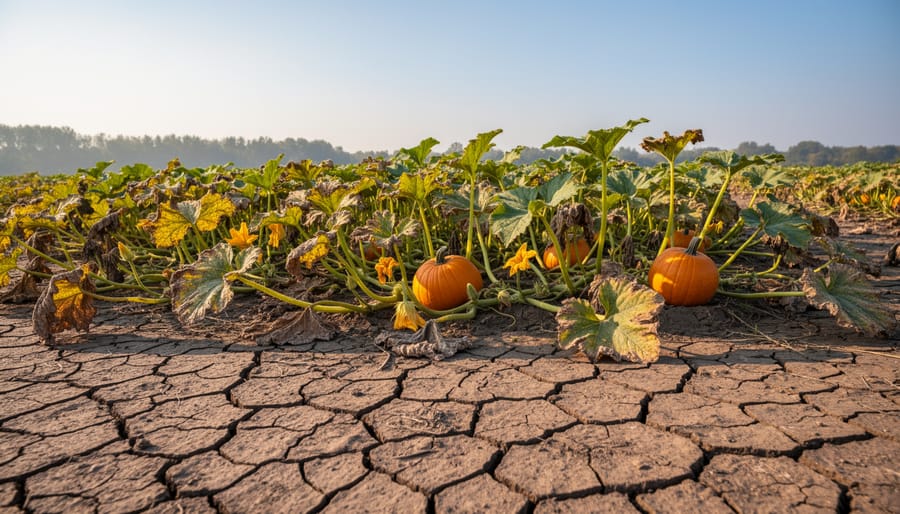
Pumpkins face threats at every stage of their growing cycle, from the moment seeds go into the ground until harvest wraps up in late September. Understanding this timeline helps explain why a single weather event, or a string of them, can devastate an entire season’s crop.
Early Season: Planting and Germination
In late May and early June, when southern Alberta farmers plant pumpkin seeds, soil moisture determines whether seeds germinate successfully. Drought during this window means seeds sit in dry earth, delaying sprouting or causing patchy emergence. Conversely, heavy rain saturates soil, suffocating seeds before they can sprout and encouraging fungal diseases that rot seedlings underground.
Mid-Season: Vine Growth and Flowering
Through July and early August, pumpkin vines spread aggressively, developing the leaf canopy that fuels fruit production. This is when drought impacts pumpkin season most severely, without consistent moisture, vines stop expanding, leaves wilt, and plants abort flowers before they can set fruit. Extreme heat above 32°C compounds the problem by triggering heat stress that shuts down pollination, even when bees are active. On the opposite end, flooding drowns roots, cutting off oxygen and causing permanent damage that stunts vine growth for the rest of the season.
Late Season: Fruit Development and Maturation
From mid-August through September, pumpkins bulk up and develop their signature orange color. Hail or severe windstorms during this critical phase puncture rinds, creating entry points for rot and making fruit unmarketable. Extreme heat accelerates ripening, causing pumpkins to mature weeks ahead of schedule when they’re smaller and less flavorful. Late-season flooding is equally destructive, pumpkins sitting in waterlogged soil develop soft spots and decay from the ground up, ruining fruit that took months to grow.
This vulnerability across multiple growth stages explains why 2026’s pattern of overlapping weather extremes, drought in British Columbia, flooding in Ontario and Manitoba, and heat waves nationwide, has left Canadian growers bracing for significant crop losses.
Where Pumpkin Crops Are Being Hit Hardest
British Columbia: Drought and Wildfire Risk
British Columbia’s pumpkin growers are facing the toughest conditions in the country this season. According to the National Agroclimate Risk Report released in August 2026, drought in central interior and Okanagan regions has created the most significant climate-related agricultural risk across Canada.
Wildfires burning through parched farmland have forced some growers to abandon fields entirely, while those still farming are dealing with severely low surface water levels that leave irrigation systems struggling to keep up. Crops are visibly stressed, pumpkin vines are yellowing earlier than normal and fruit sizes are smaller than typical years. Some farmers can’t even access their fields safely due to fire risk or smoke conditions. Water restrictions have reached severe levels, forcing growers to make impossible choices about which crops get the limited water available. For pumpkin plants that need consistent moisture through their long growing season, these conditions mean reduced yields and uncertain harvest prospects heading into fall.
Ontario and Manitoba: Flooding Concerns
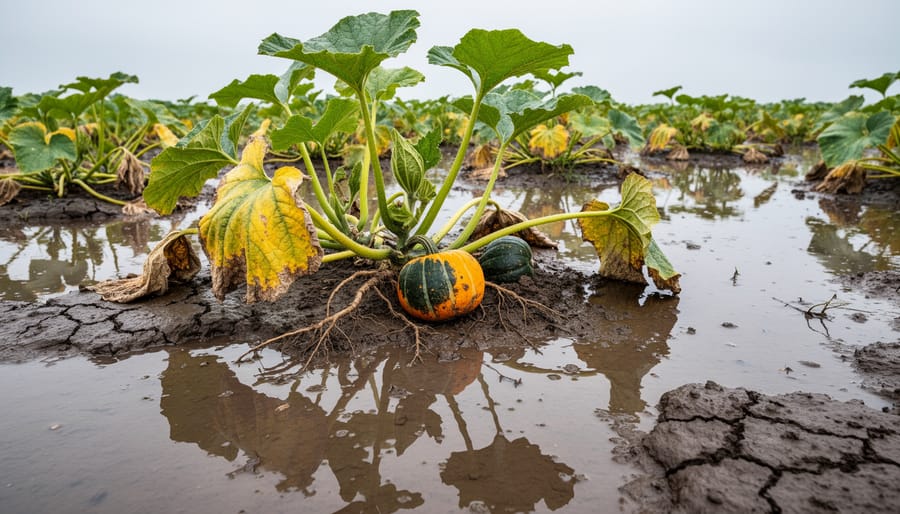
Ontario and Manitoba are grappling with flooding that’s putting significant pressure on pumpkin crops. Recent flooding in Ontario has saturated fields, creating conditions that threaten root health and increase disease risk just as pumpkins enter their critical growth phase. In Manitoba, growers are still dealing with the aftereffects of early season flooding that delayed planting and reduced the viable growing area. Waterlogged soil prevents roots from accessing oxygen, leading to rot and stunted development. For pumpkins that survived the initial flooding, the extended moisture has created ideal conditions for fungal diseases that can wipe out entire patches. These ongoing water issues mean some fields may produce smaller harvests or lower-quality pumpkins, potentially affecting supply across southern Ontario and Manitoba’s farming regions as we head into fall.
Eastern Canada: Excessive Precipitation
Eastern Canada farmers are dealing with the opposite problem: too much water at the wrong time. Over the last 30 days, parts of the region, particularly around Ottawa, have received extremely high precipitation, creating serious challenges for pumpkin growers trying to bring crops to maturity.
When fields stay saturated for extended periods, pumpkin vines struggle. Waterlogged soil suffocates root systems, cutting off oxygen and creating ideal conditions for fungal diseases like powdery mildew and root rot. The constant moisture also makes it nearly impossible for farmers to access fields for essential tasks like weeding, pest management, or harvesting without compacting soil or damaging plants.
This extreme weather update shows how unpredictable rainfall patterns are reshaping the growing season across the country. For pumpkin farmers in Eastern Canada, excessive rain delays ripening and increases the risk of rot before harvest, threatening both yield and quality heading into fall.
Nationwide: Heat and Severe Weather
Extreme heat has rippled across multiple regions this season, pushing pumpkin plants to develop faster than normal, which sounds helpful but actually disrupts the natural growth cycle growers rely on. When temperatures spike, pumpkins ripen prematurely, leaving them smaller and more susceptible to cracking or sunscald before they’re ready for harvest. Beyond accelerated growth, the heat has fueled severe thunderstorms, hail, and high winds that have torn through fields, damaging vines and splitting mature pumpkins. These localized but intense weather events have also knocked out irrigation systems and damaged farm infrastructure, compounding challenges for growers already managing drought or flooding in other parts of the country.
Types of Weather-Related Pumpkin Crop Damage
Extreme weather doesn’t just threaten pumpkin crops in one way, it attacks from multiple angles, each leaving distinct signatures on the plants and fruit. Understanding these damage patterns helps explain why this year’s harvest is so unpredictable and why some pumpkins you see at markets might look different than usual.
When severe storms roll through pumpkin fields, hail and high winds inflict immediate physical trauma. Hailstones puncture developing fruit, creating entry points for rot and leaving permanent scarring that makes pumpkins unmarketable. Strong winds can snap vines, tear leaves that the plant needs for photosynthesis, and even flip fruit over, exposing sun-sensitive undersides. These damaged pumpkins might still grow, but they’re destined for the compost pile rather than your front porch.
Drought stress shows up differently. Without adequate moisture, pumpkin plants produce smaller fruit with thicker, tougher rinds. The flesh inside becomes denser and sometimes stringy. Leaves wilt and yellow prematurely, reducing the plant’s ability to feed developing pumpkins. In severe cases, plants abort fruit entirely to conserve resources, leaving vines with nothing to harvest.
Flooding creates the opposite problem. When fields sit underwater for even a few days, pumpkin roots suffocate and develop rot. The soggy conditions also encourage fungal diseases that spread rapidly through wet foliage. Root damage means plants can’t absorb nutrients properly, leading to stunted fruit that never reaches full size.
The main weather-related damage types include:
- Physical storm damage from hail and wind causing punctures, scarring, and broken vines
- Drought stress symptoms including small fruit, thick rinds, yellowed leaves, and fruit abortion
- Flood-related root rot, fungal diseases, and nutrient uptake problems
- Heat-induced sunscald, premature ripening, and blossom drop
- Disease pressures that intensify when weather extremes weaken plant defenses
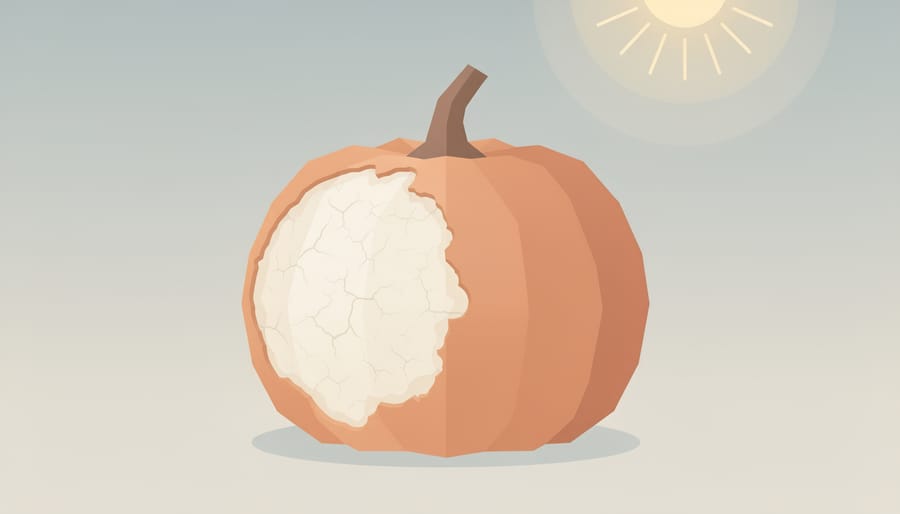
Extreme heat accelerates everything. Temperatures above 35°C cause sunscald, white or brown patches on fruit exposed to direct sun. Heat also triggers early ripening before pumpkins reach full size, and it can cause flowers to drop before pollination happens. These heat-stressed plants become more vulnerable to diseases and pests that normally wouldn’t pose serious threats.
What This Means for Your Fall Pumpkin Supply
This season’s weather chaos translates directly to what you’ll see at Calgary farmers’ markets and grocery stores this fall. Expect smaller selections, higher prices, and less predictable availability as growers across Canada grapple with the compounding effects of drought, flooding, and extreme heat.
Local pumpkin patches may open later than usual or offer fewer varieties, particularly larger carving pumpkins that require consistent water throughout their 90 to 120-day growing season. Decorative gourds and smaller pie pumpkins might be more available since they mature faster and handle stress better. Some farms may import from regions less affected by this year’s weather extremes, which pushes prices up further.
Quality will vary noticeably. Pumpkins stressed by drought tend to be smaller with thicker, tougher rinds. Those exposed to excessive rain or humidity may show soft spots or early rot, reducing shelf life once you bring them home. Check carefully for sunscald patches or storm damage before purchasing.
For Halloween and fall decorating, plan ahead. Call your usual pumpkin supplier in late September to check availability rather than waiting until mid-October. If you’re concerned about weather safety while shopping outdoors during unpredictable conditions, review extreme hot weather safety tips, and track storms before heading to outdoor markets. Supporting local farmers directly helps them recover from this challenging season while securing your own fall traditions.
How Extreme Weather Doing to Canada S Pumpkin Crops Works
The process starts when extreme weather disrupts the pumpkin plant’s ability to regulate water and nutrients. During drought, the plant prioritizes survival over fruit development, it closes tiny pores called stomata to conserve moisture, which slows photosynthesis and reduces the sugars needed for pumpkin growth. The vines shrink, flowers abort, and any fruit that does form stays small because the plant can’t deliver enough water to fill the pumpkin cells.
When flooding hits, the opposite problem occurs. Waterlogged soil pushes out oxygen, suffocating the roots within hours. The roots can’t absorb nutrients even when surrounded by water, so the plant effectively starves. Root rot sets in, fungi spread through damaged tissue, and the entire plant collapses. If flooding happens during flowering, the blossoms drop before pollination completes.
Heat accelerates everything unnaturally. Temperatures above 35°C force pumpkins to ripen weeks early, before they’ve reached full size. The skin hardens prematurely, locking in a smaller fruit. At the same time, extreme heat stresses pollinators, bees reduce their activity during midday heat waves, so fewer flowers get pollinated in the first place.
Severe storms cause immediate physical damage. Hail punctures developing fruit, creating entry points for rot. Wind tears vines from the ground, severing the connection between roots and fruit. These injuries compound over weeks as secondary infections spread. Farmers monitoring weather alerts tools can prepare for some events, but sudden localized storms still catch fields vulnerable.
Common Questions About Weather and Pumpkin Crops
How is the weather affecting pumpkin crops this year?
Drought conditions in British Columbia are causing crop stress and water restrictions, while flooding in Ontario and Manitoba has damaged fields and root systems. Extremely high temperatures across parts of Canada have accelerated crop development and contributed to severe weather that’s caused localized damage to pumpkin fields and farm infrastructure.
Why are pumpkin crops particularly vulnerable to extreme weather?
Pumpkins need consistent water throughout their 90-120 day growing season and are sensitive to both drought stress and waterlogged soil. Their shallow root systems can’t reach deep water during dry spells, and their large leaves lose moisture quickly in extreme heat, making them highly responsive to weather fluctuations.
When will growing conditions improve for farmers?
The National Agroclimate Risk Report as of August 18, 2026 shows ongoing challenges, with the next update scheduled for September 22, 2026. Conditions vary by region, but many farmers are managing water restrictions and weather uncertainty through harvest season, which typically runs through October.
Are pumpkins more affected by drought or flooding?
Both extremes cause serious damage but in different ways. Drought stunts growth and reduces fruit size, while flooding kills roots and promotes disease that can destroy entire patches. The rapid swing between these extremes, as seen across Canada this season, is particularly hard on crops because plants can’t adapt quickly enough.
These questions reflect the concerns southern Alberta residents have as they head into fall activities and Halloween planning. The unpredictable weather patterns documented in the National Agroclimate Risk Report show why this year’s pumpkin availability is harder to predict than usual. Farmers are adapting on the fly, adjusting irrigation where possible and salvaging what they can from damaged fields, but the outcome won’t be fully clear until harvest wraps up in the coming weeks.
The 2026 pumpkin season highlights just how vulnerable our food supply is to weather extremes. From drought-stressed fields in British Columbia to flood-damaged crops in Ontario and Manitoba, this year’s harvest faces challenges from nearly every corner of the country. Southern Alberta hasn’t escaped either, with extreme heat accelerating crop development and severe storms causing localized damage across the region.
These aren’t abstract farming statistics, they’ll show up in the pumpkins available at your local farmers’ market, the prices you see at grocery stores, and the options for fall activities. When you pick up a pumpkin this season, you’re supporting growers who navigated an exceptionally difficult year.
We’d love to hear from you. Have you noticed changes in pumpkin availability or pricing around Calgary? Are local farmers in your area facing similar weather challenges? Share your observations in the comments below, or call in during our afternoon show to discuss how climate extremes are reshaping agriculture right here in southern Alberta. These conversations matter, they connect our community and help everyone understand what’s happening in the fields that feed us.