Brampton residents checking air quality today will find conditions ranging from low to moderate risk, with the current Air Quality Health Index sitting at 3 as of July 21, 2026. While that’s good news for outdoor plans right now, it’s a marked improvement from just last week when Peel Public Health issued an air quality warning on July 15 after smoke from forest fires in Northwestern Ontario pushed pollution levels higher and reduced visibility across the region.
Understanding what drives these fluctuations matters if you live here. Wildfire smoke can travel hundreds of kilometers, turning a clear summer day hazy within hours and pushing the AQHI from safe levels into territory where vulnerable groups need to take precautions. The recent warning served as a reminder that Brampton’s air quality doesn’t exist in isolation. What burns in the boreal forest eventually drifts south, carrying fine particulate matter that irritates lungs and aggravates conditions like asthma.
The Air Quality Health Index uses a 1-to-10 scale to communicate risk, with readings of 3 or below considered low and anything above 7 marking high risk. Forecasts show Brampton holding steady at low-to-moderate levels through the coming days, but those numbers can shift quickly during wildfire season or when weather patterns trap pollutants over southern Ontario.
Current Air Quality Conditions in Brampton
As of Monday evening, July 21, 2026, Brampton’s air quality has returned to healthier levels. The Air Quality Health Index reading came in at 3, calculated at 8:00 pm EDT, placing the city firmly in the Low Risk category. This marks a significant improvement from conditions just days earlier when wildfire smoke prompted regional health warnings.
The short-term forecast looks equally promising. Environment Canada projects the AQHI will remain at 3 for Tuesday night, drop to 2 on Wednesday, and return to 3 by Wednesday night. These readings mean most residents can resume normal outdoor activities without concern.
To put the current conditions in context, here’s how Brampton’s air quality has tracked over recent readings:
| Date & Time | AQHI Reading | Risk Level |
|---|---|---|
| Mon, July 20, 9:00 pm EDT | 5 | Moderate Risk |
| Mon, July 21, 8:00 pm EDT | 3 | Low Risk |
| Tue, July 22 (forecast) | 3 | Low Risk |
| Wed, July 23 (forecast) | 2 | Low Risk |
The steadily declining numbers show that the smoke event affecting Peel Region has largely cleared. While Monday evening still showed a Moderate Risk reading of 5, conditions improved notably within 24 hours. This trajectory suggests the worst has passed, though wildfire season continues across Ontario and conditions can shift with changing wind patterns.
For residents who cancelled outdoor plans or experienced breathing difficulties during the warning period, this week brings welcome relief. The consistent low-risk forecast means you can confidently return to morning runs, evening walks, and outdoor work without health concerns.
What Caused the Air Quality Warning
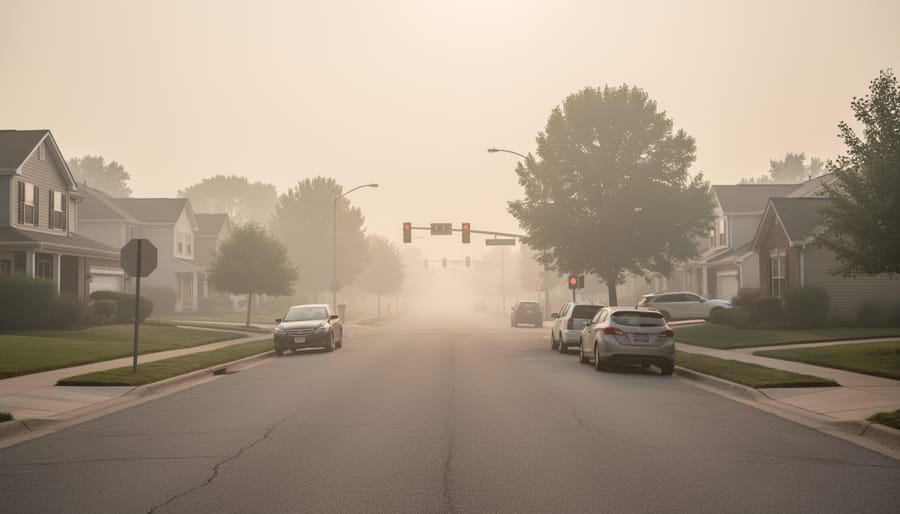
The air quality warning issued by Peel Public Health on July 15 stemmed from a familiar seasonal threat: wildfires burning hundreds of kilometers away in Northwestern Ontario. Smoke from these forest fires drifted south over several days, blanketing Peel Region in a haze that reduced visibility and sent pollution levels climbing well above normal thresholds.
Forest fire smoke carries a complex mix of pollutants, but the most concerning component for human health is fine particulate matter, known as PM2.5. These microscopic particles measure less than 2.5 micrometers in diameter, roughly 30 times smaller than the width of a human hair. Their tiny size allows them to bypass the body’s natural defenses and penetrate deep into the lungs, and in some cases enter the bloodstream. When wildfire smoke arrives in populated areas, it can quickly push air quality readings from safe levels into the moderate or high risk categories that trigger public health warnings.
The mid-July event brought noticeably poor air quality to Brampton and surrounding communities. Residents reported the telltale signs: a milky or orange-tinted sky, the smell of smoke outdoors, and reduced visibility that made distant buildings or landmarks harder to see. These conditions persisted for several days as weather patterns held the smoke over southern Ontario.
Public health officials issued the warning to alert vulnerable populations and encourage everyone to take precautions. During such events, spending extended time outdoors increases exposure to harmful particulates, particularly for those with existing respiratory conditions, cardiovascular issues, or compromised immune systems. The warning served as a signal to limit outdoor activities, keep windows closed, and run air filtration systems if available until the smoke cleared and readings returned to safer levels.
Understanding the Air Quality Health Index
The Air Quality Health Index uses a scale from 1 to 10+ to communicate health risks from air pollution, with higher numbers indicating greater risk to your health. Unlike a simple good-or-bad rating, AQHI considers multiple pollutants including ground-level ozone, nitrogen dioxide and fine particulate matter, then translates that data into a single number that tells you how the air might affect you today.
The index breaks down into four risk categories that guide your daily decisions:
- Low Risk (1-3)
- Ideal conditions for all outdoor activities. No need to adjust your plans regardless of your health status.
- Moderate Risk (4-6)
- Most people can enjoy normal outdoor activities, but those with respiratory conditions like asthma should watch for symptoms and consider reducing intense exertion if they feel affected.
- High Risk (7-10)
- Children, seniors and people with heart or lung conditions should reduce outdoor physical activity. Everyone else may want to scale back strenuous exercise, especially during peak afternoon hours.
- Very High Risk (10+)
- Everyone should avoid or significantly reduce outdoor physical exertion. Vulnerable groups should stay indoors with windows closed when possible.
When you check Brampton’s current AQHI reading, you’re getting a snapshot calculated within the past few hours. The forecast maximum tells you the highest risk level expected during that period, which helps you plan outdoor activities. For instance, a reading of 3 means conditions are safe for everyone, while a forecast showing 6 means you might want to reschedule that afternoon run if you have asthma.
The beauty of AQHI is its simplicity: you don’t need to understand pollutant concentrations or chemical names. Just check the number, see which category it falls into, and adjust your day accordingly based on your personal health situation.
Who’s Most at Risk During Poor Air Quality Events

During air quality warnings like the one Brampton experienced on July 15, some residents face greater health risks than others. Children are particularly vulnerable because their lungs are still developing and they breathe faster than adults, taking in more air (and pollutants) relative to their body size. Seniors also need extra caution, as aging respiratory systems process air contaminants less efficiently.
People managing respiratory conditions, asthma, COPD, bronchitis, often notice symptoms worsening when smoke or smog settles over the region. Even moderate pollution levels that barely affect healthy adults can trigger coughing, wheezing, or chest tightness for someone with compromised lung function. Heart disease patients should also pay attention, since fine particles from wildfire smoke can strain the cardiovascular system.
Outdoor workers and athletes round out the high-risk groups. Spending hours outside during a warning means breathing in more pollutants, and physical exertion increases that exposure. Construction crews, landscapers, and anyone exercising outdoors should stay safe outdoors by checking the AQHI before heading out and scaling back activity if readings climb.
If you’re in any of these categories, keep windows closed during poor air quality days, run air conditioning on recirculate if available, and move strenuous activities indoors. Stock up on any prescribed inhalers or medications before wildfire season peaks, and don’t hesitate to stay inside when the air looks or smells smoky, your lungs will thank you.
How to Stay Informed About Air Quality
Staying on top of air quality conditions is easy with the right resources. The Government of Canada’s AQHI website provides hourly updates for Brampton, showing current readings and short-term forecasts. For broader weather context, live weather radar and specialized weather radar tools help you track conditions that might affect local air quality.
You can also tune in to our radio presenters for local weather updates and join the conversation in our community discussions. Real-time monitoring means checking conditions each morning during wildfire season, especially if you or your family members are in vulnerable groups. The AQHI typically updates hourly, giving you current information rather than yesterday’s news.
Brampton’s air quality has stabilized following the mid-July warning triggered by smoke from Northwestern Ontario wildfires. Current readings show low to moderate risk levels, a welcome improvement from the conditions that prompted Peel Public Health’s alert on July 15. However, wildfire season isn’t over yet, and similar events could affect our region again before summer ends.
Staying informed is your best protection. Check the Air Quality Health Index regularly during wildfire season, especially if you’re in a vulnerable group or spend significant time outdoors. Pay attention to alerts from Peel Public Health and local weather updates to make smart decisions about outdoor activities.
Have you noticed changes in air quality in your neighborhood? What strategies do you use to protect yourself and your family during poor air quality days? Share your experiences and questions in the comments below, and let’s keep the conversation going about keeping our community healthy and informed.