Calgary’s air quality forecast is available through Environment and Climate Change Canada’s Air Quality Health Index system, which delivers 24-hour predictions on a 1-10+ scale to help you plan outdoor activities and protect your health. The AQHI translates complex air pollution data into four simple risk categories: low (1-3), moderate (4-6), high (7-10), and very high (10+), giving you an instant snapshot of whether it’s safe to exercise outside, keep the kids at the playground, or adjust your daily routine.
For most of the year, Calgary enjoys low-risk air quality thanks to its prairie winds and elevation, but conditions can shift quickly during wildfire season, temperature inversions in winter, or high-traffic periods. Checking the forecast takes seconds on the government’s Local Air Quality Health Index page, and knowing what those numbers mean can make a real difference if you have asthma, heart conditions, or young children who are more sensitive to poor air.
The system updates regularly throughout the day, so you’re not guessing whether that haze on the horizon means you should skip your morning run or move soccer practice indoors. Understanding how to read the forecast and what actions to take at each risk level puts you in control, whether you’re planning a family hike in Fish Creek Park or just deciding if it’s a good day to open the windows.
What Is the Air Quality Health Index?
The Air Quality Health Index is Canada’s national air quality monitoring tool, designed specifically to help you understand health risks from air pollution. Unlike systems that simply measure pollution levels, the AQHI translates those measurements into practical health guidance using a numbered scale from 1 to 10+.
Environment and Climate Change Canada developed this index by combining readings of three main air pollutants into a single number that reflects the actual health risk at any given time. The scale divides into four categories: Low Risk (1-3), Moderate Risk (4-6), High Risk (7-10), and Very High Risk (10+). Each category tells you what precautions, if any, you should take based on your health status and activity level.
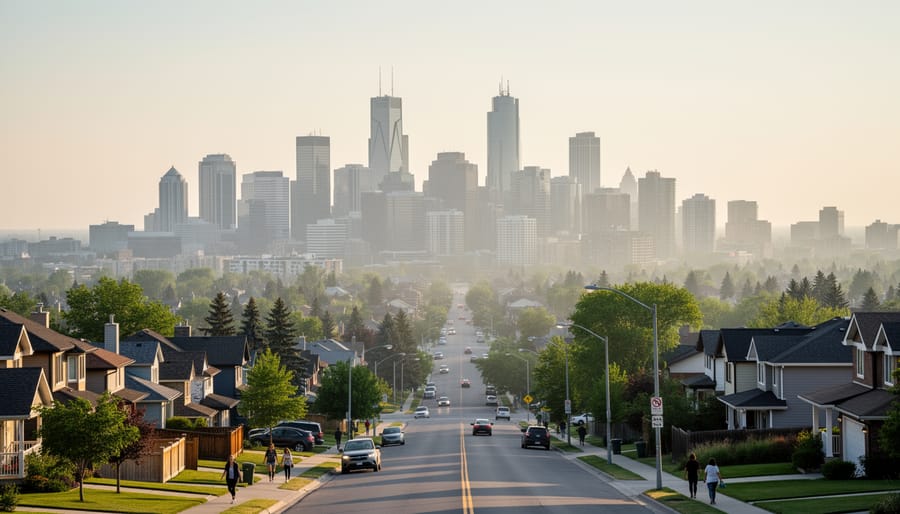
What makes the AQHI different from older air quality systems is its focus on health outcomes rather than regulatory standards. The index was built using health research that links pollution levels to emergency room visits and health impacts across the Canadian population. This means the number you see on Calgary’s AQHI forecast directly reflects the potential health risk for that day, not just whether pollution exceeds a certain threshold. For most days, Calgary sits in the Low Risk range, but understanding the full scale helps you know what to do when conditions change.
Understanding Calgary’s AQHI Risk Categories
The AQHI scale translates complex air quality measurements into four straightforward risk categories, each tied to specific number ranges. This system makes it simple to understand what the air quality reading means for your health and daily plans.
| Risk Category | AQHI Range | General Population | At-Risk Groups |
|---|---|---|---|
| Low Risk | 1-3 | Ideal for outdoor activities | No restrictions needed |
| Moderate Risk | 4-6 | Normal activities acceptable | Consider reducing intense outdoor exercise |
| High Risk | 7-10 | Reduce or reschedule strenuous outdoor activities | Avoid strenuous activities, stay indoors if symptoms develop |
| Very High Risk | 10+ | Avoid intense outdoor activities | Stay indoors, keep windows closed |
Most days in Calgary fall into the Low Risk category, where readings between 1 and 3 signal no concerns for anyone. You’ll see these values most often outside wildfire season.
When the index hits Moderate Risk (4-6), most people won’t notice any difference, but children, seniors, and those with heart or lung conditions should take note. If you’re planning intense outdoor exercise and you’re in this group, shifting your workout to a cooler time of day or choosing a less strenuous option makes sense.
High Risk readings (7-10) warrant attention from everyone. The general public should think about dialing back outdoor intensity, while at-risk individuals need to be more cautious. Someone with asthma, for instance, might notice symptoms they wouldn’t experience on a Low Risk day.
Very High Risk (10+) is rare in Calgary but can occur during significant wildfire smoke events. At this level, everyone should minimize time outdoors, not just vulnerable groups. At-risk individuals should stay inside with windows closed and run air conditioning or filtration systems if available.
How to Check Calgary’s Air Quality Forecast
The easiest way to check Calgary’s air quality forecast is through Environment and Climate Change Canada’s official website. Their Local Air Quality Health Index page gives you both current conditions and what to expect over the next day, all in one place.
When you land on Calgary’s AQHI page, you’ll see two key pieces of information right away. The current reading tells you what the air quality is like right now, while the forecast maximums show you the highest AQHI value expected for specific time periods, tonight, tomorrow, tomorrow night, and the day after. These maximums help you plan ahead because they show when air quality might be at its worst during each period.
The forecasts update throughout the day as conditions change, so checking in the morning before you plan outdoor activities gives you the most reliable picture. You might see a forecast showing 3 (Low Risk) for Monday night, Tuesday, and the following days, meaning conditions are expected to remain good across those periods. Each forecast maximum represents the peak level expected during that specific timeframe, not an average.
If you want more detailed visual information, air quality radar maps can show you real-time conditions across southern Alberta, which is especially useful during wildfire season when smoke patterns shift quickly.
The official government page remains your most reliable source because it’s updated regularly and uses the same standardized AQHI system nationwide.
When Air Quality Matters Most in Calgary
Calgary’s air quality follows predictable seasonal patterns that help you know when to check forecasts more frequently. Summer wildfire season, typically running from May through September, brings the most significant air quality events. Smoke from fires in British Columbia or Alberta can blanket the city for days, pushing the AQHI into moderate or high risk levels. During these months, checking the forecast daily makes sense, especially if you notice hazy skies or smell smoke.
Winter presents a different challenge through temperature inversions. Cold air gets trapped near the ground under a layer of warmer air, preventing vehicle emissions and heating exhaust from dispersing. These inversions happen most often during calm, cold stretches in December through February. You’ll notice them on still mornings when the air feels heavy and visibility seems reduced.
Spring and fall are generally Calgary’s cleanest air seasons, with the AQHI rarely climbing above low risk. However, spring dust storms occasionally stir up particulates, and fall can bring late-season wildfire smoke if conditions stay dry.
Traffic-related pollution concentrates during rush hours along major corridors like Deerfoot Trail and Memorial Drive, but Calgary’s frequent chinook winds typically clear the air quickly. The city’s position on the prairies means weather systems move through regularly, preventing pollution from building up like it does in valley cities. If you have respiratory sensitivities or plan outdoor activities with children or seniors, check the forecast before extended time outside during wildfire season or winter inversion periods.
Making Smart Decisions Based on the Forecast

Checking the forecast before you head out gives you a clear picture of what adjustments might make your day healthier and more comfortable. When Calgary’s AQHI sits at Low Risk (1-3), you’re good to go with your normal routine. Plan that long run, let the kids play outside all afternoon, and keep windows open if you like fresh air.
Moderate Risk levels (4-6) call for some simple tweaks, especially if you or family members have asthma, heart conditions, or other sensitivities. Schedule intense workouts for early morning when air quality tends to be better, and keep outdoor play sessions a bit shorter for young children. If your elderly parents or grandparents usually walk in the afternoon, suggest they shift to morning instead or choose a gentler pace.
High Risk days (7-10) mean it’s time to rethink outdoor plans altogether. Move exercise indoors, reduce the length and intensity of children’s outdoor activities, and check in with vulnerable family members about staying inside during peak pollution hours. This is when combining air quality awareness with extreme hot weather safety becomes particularly important during summer months.
Very High Risk readings (10+) are rare in Calgary but do happen during major wildfire smoke events. Cancel outdoor events if possible, keep everyone inside with windows closed, and consider rescheduling that weekend camping trip. The forecast helps you make these calls with confidence rather than guessing based on how the sky looks.
Common Questions About Calgary’s Air Quality Forecast
How reliable are Calgary’s AQHI forecasts? Environment and Climate Change Canada’s 24-hour predictions are generally accurate for broad trends, though localized conditions like traffic patterns or small fires may cause variations the forecast doesn’t capture. The system updates regularly to reflect changing atmospheric conditions, so checking closer to your planned activity gives the most current picture.
Why does Calgary’s AQHI differ from nearby communities?
Each monitoring station measures local conditions, so areas upwind of pollution sources or in different weather patterns will show different readings. Urban Calgary typically sees slightly higher values than surrounding rural areas due to traffic and industrial activity.
What should I do if the sky looks hazy but the AQHI shows Low Risk?
Visible haze doesn’t always mean poor air quality at ground level, it could be high-altitude smoke or natural phenomena. Trust the measured index for health decisions, but if you experience symptoms, limit outdoor activity regardless of the number.
Where can I find alerts about air quality changes?
Environment and Climate Change Canada issues special air quality statements on their weather alert page when conditions are expected to reach moderate or higher levels. Checking the forecast page before planning outdoor activities helps you stay ahead of any shifts.
The forecasts work best as planning tools rather than real-time measurements. If you need historical data to track patterns over weeks or months, the same government portal archives past AQHI readings for Calgary, letting you identify seasonal trends or compare this year’s conditions to previous periods.